-
The Princess Bride Is the Perfect Movie for Any ELA Classroom
You know those days when you just really need to grade a bunch of stuff, get the children to stop talking for a minute, or straight up veg-out for a little while…but you also can’t justify losing instructional time? Let me tell you why The Princess Bride is the absolute best thing in the whole Continue reading
-
A Movie Marathon in ELA: Standards-Based Fun for the Weeks Before Break
The weeks before Thanksgiving (and again before winter break) can feel… well, a little chaotic. The students are buzzing, the schedule is off, and let’s be honest… you could use your own breather. But “just showing a movie” in any class is usually a no-go. That’s exactly why a group of secondary ELA teachers and Continue reading
-
Bite-Sized PD for Secondary ELA
My department is tiny. There are only ten of us for grades 6-12. We meet pretty regularly though and I love it. Every time that we meet, we do a little bite-sized PD organized by one of us. This month is my turn to present and I’m really excited about. I’m leading a quick 15–20 Continue reading
-
What the Science of Reading Looks Like in a Secondary Classroom
When most people hear “Science of Reading,” they picture phonics charts, decodable readers, and first graders sounding out c-a-t and d-o-g. And while those things are absolutely part of reading development, they don’t reflect the full picture, especially for educators working with older students. Here’s the truth:The Science of Reading isn’t just for elementary. And Continue reading
-
Why ‘Learning to Read’ Ends in 3rd Grade Is a Myth That Hurts Secondary Students

For decades, educators have heard a phrase very similar to this one:In K–3, students learn to read. In 4th grade and beyond, they read to learn. On the surface, it sounds logical. Foundational reading skills are introduced in the early years, and as students progress, texts get more complex and content-rich. But here’s the problem: Continue reading
-
Rethinking Tier 1 Instruction in Secondary Classrooms with the Science of Reading

I might be in the minority BUT I feel like my teacher education program didn’t prepare me to teach reading. In fact, I’m pretty sure I was taught that Tier 1 instruction at the secondary level should only ever prioritize whole text tasks like literary analysis, thematic discussion, and essay writing. I know I’m not Continue reading
-
Writing to Boost Reading Comprehension

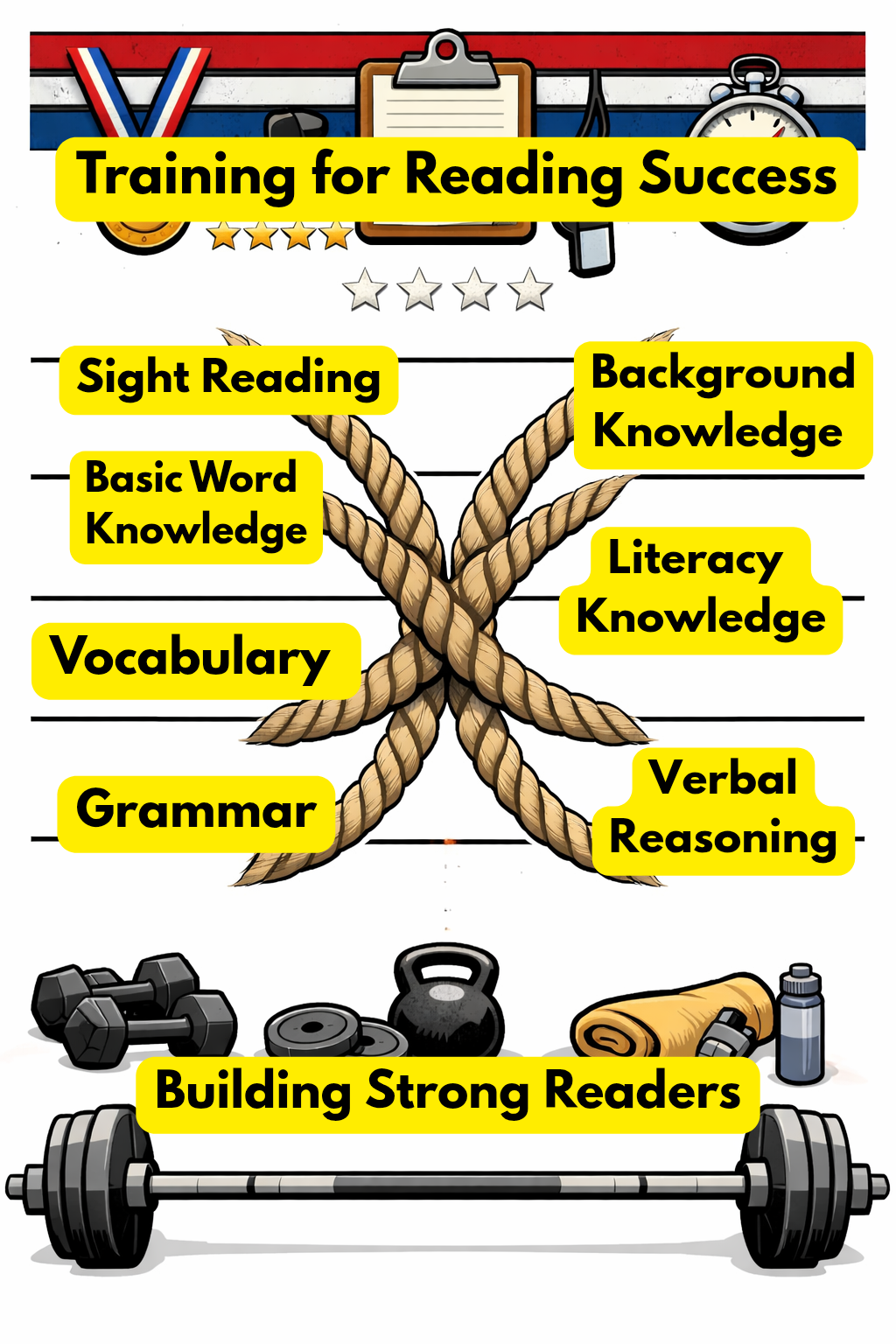
When we think about the Science of Reading, writing doesn’t always come to mind first. But the truth is, writing plays a powerful role in strengthening students’ comprehension—especially when aligned to the same levels we address in Scarborough’s Reading Rope: word recognition and language comprehension. Scarborough’s Reading Rope reminds us that reading comprehension is a Continue reading
-
Top Paragraph Activities for Engaging Students and Building Comprehension

We’re almost at the end of this blog series! We’ve discussed word level comprehension, sentence level decoding and now we’re looking at whole paragraphs. Understanding how paragraphs, or small parts of a text, work together is essential for reading comprehension. Strong topic sentences, logical paragraph order, and effective transition words guide readers through an author’s Continue reading
-
Teaching Sentence-Level Decoding in the Context of Texts: Engaging Activities for Middle and High School Teachers

When teaching middle and high school students, one of the most crucial skills for reading comprehension… but one that gets eliminated or skimmed over waaaaaaay toooooooo often, is sentence-level decoding. Usually, when we hear the word decoding, we automatically think of decoding words and assume that it is an elementary level skill that we don’t Continue reading
-
10 Engaging Vocabulary Activities for Stronger Word Knowledge in Secondary ELA

Building strong word knowledge is essential for students’ reading comprehension, writing skills, and overall language development. It is the most foundational part of reading but, often, our students come to us behind. There are absolutely times when interventions are necessary. I have another blog post on what those might look like for your secondary students, Continue reading