When students struggle with reading tasks, it’s easy for us as secondary ELA teachers to assume the issue is purely motivation. They just don’t want to read. But for many secondary students, the real barrier is that they are missing key foundational skills. They’re missing the reading and writing muscles they need in order to work independently.
That’s why a group of secondary ELA teacher-authors and I put together The Reading & Writing Olympics, a two-week, skill-based mini unit designed to strengthen those muscles intentionally. This unit focuses on targeted practice rather than a full-length text. No novel required and no overwhelming prep.
And to keep engagement and motivation high, all of the activities are Olympics-themed, blending skill-building with competition and fun.
Know Your Muscles: Using the Reading Rope for Metacognition
First, let’s start with the muscles. Before students jump into the Olympic events, they need to know which muscles they’re training. That’s where the Science of Reading research, specifically Scarborough’s Reading Rope, comes in. Each strand of the rope represents a critical reading skill that students need to strengthen.
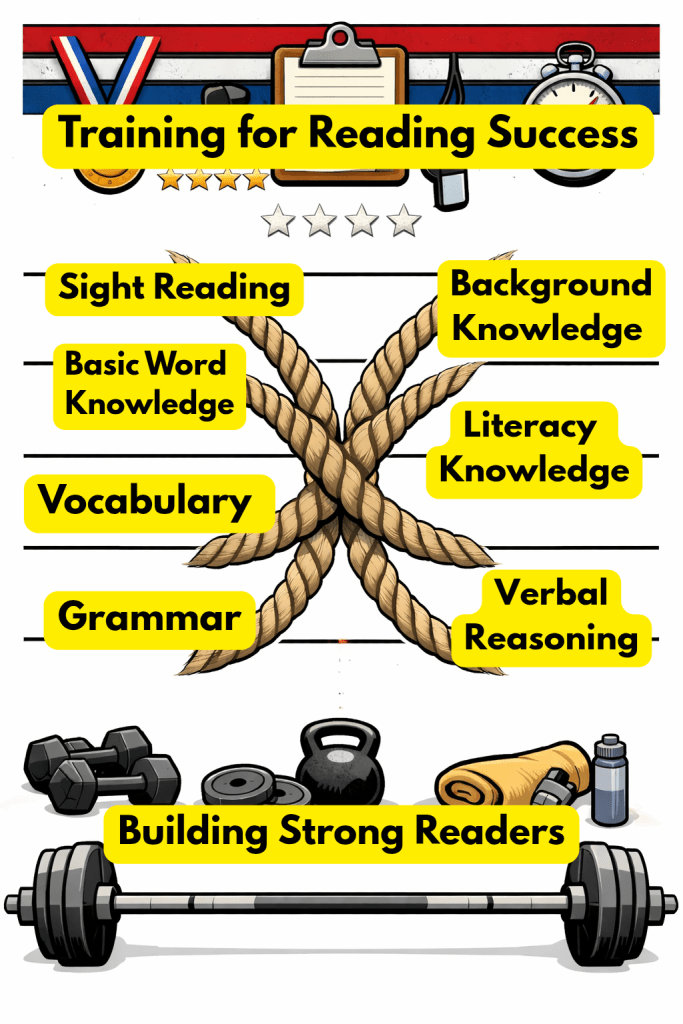
In order to introduce this concept to students, show them the above poster as a muscle map for reading. Just like an athlete targets specific muscle groups in training, students can identify which reading skills they need extra work in. By making the Reading Rope visible and interactive, students not only practice skills, they also think about their thinking, becoming more aware of where they need to put in extra effort.
Instead of the vague goal of “reading better,” students can say things like:
- I need to work on understanding sentence structure.
- My lack of vocabulary is slowing me down.
- I struggle when texts require me to make an inference, or think beyond the text.
That awareness changes how students approach every activity in ELA class. They know WHY they’re training and, just like athletes, they train with intention.
Now check out the Lesson Plans included in this mini unit. Make sure to download them all!
Warming Up your Muscles
Zero-Prep Vocabulary with Groovelit
In these Reading & Writing Olympics, practice starts with a warm-up and this one is fast, engaging, and requires zero prep.
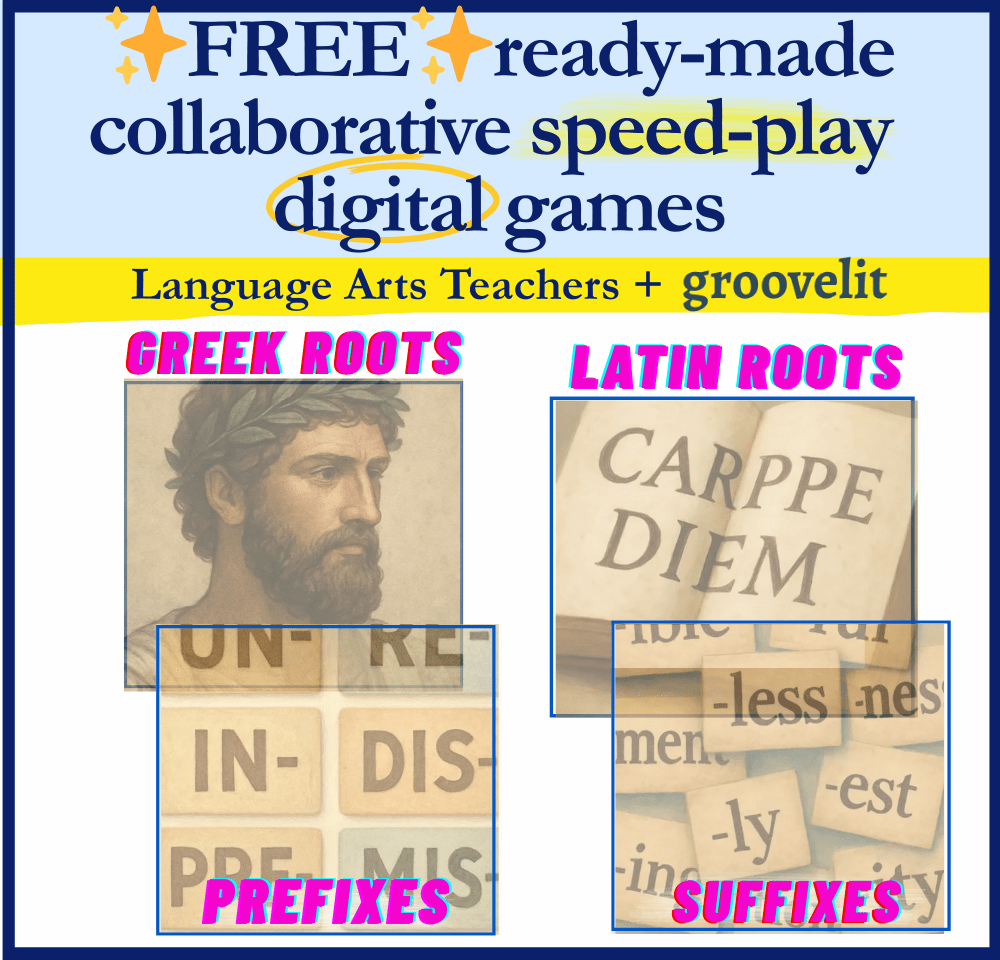
This free Vocabulary Game Series on the Groovelit platform from Language Arts Teachers is a high-energy way to enhance vocabulary acquisition. You simply press play and watch them lock in 🙌
Here’s how it works:
- You enter your name + email
- Pick a game
- Hit Play
Students join instantly using a simple code—no roster uploads, no student logins, no setup spiral. They read, respond, and compete in real time while you circulate, coach, and enjoy that rare moment when everyone is participating.
For the Reading & Writing Olympics, this works perfectly as:
- A Monday launch
- A 5-minute bell ringer
- A 15-minute station
- A full-class game day
- A review or sub-day win
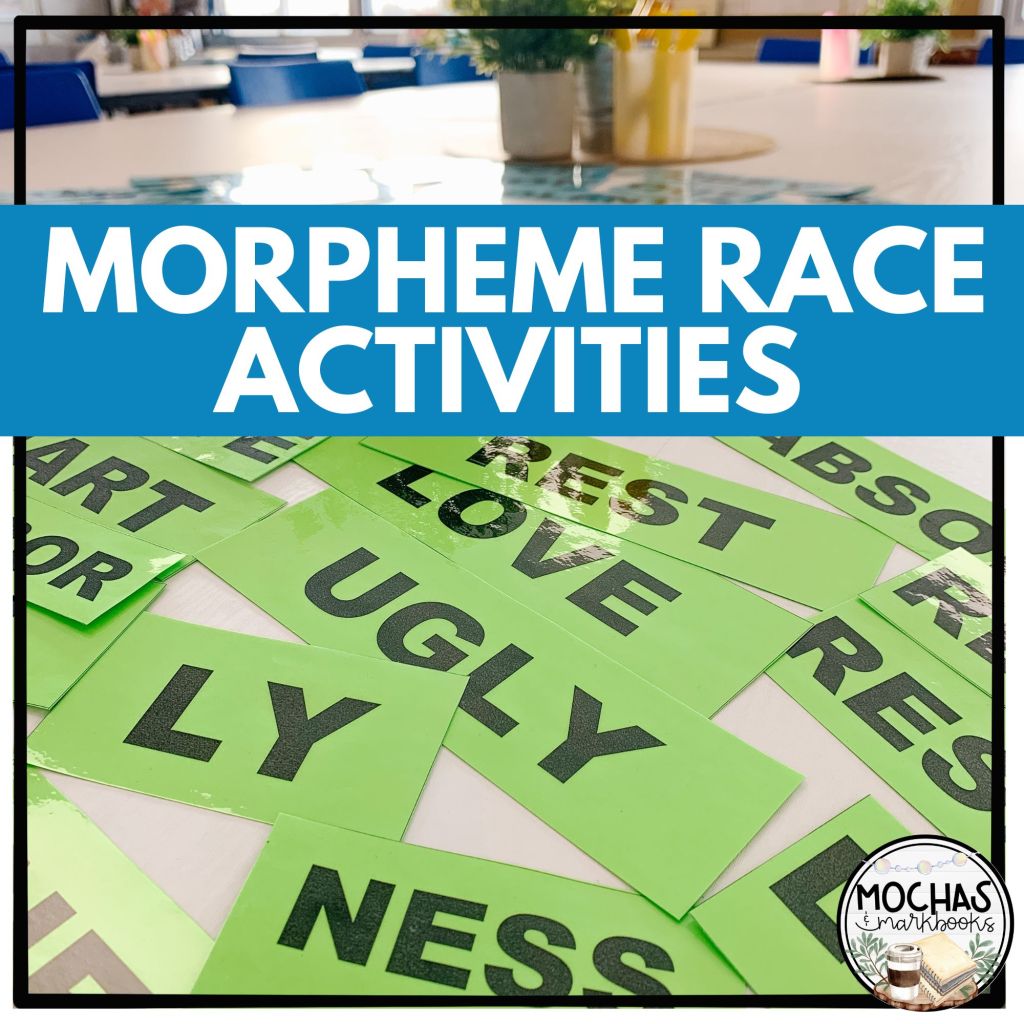
Morpheme Race Activities
Gamify your vocabulary instruction with these Morpheme Race Activities! These games have been tried and true in Katie’s classroom and are sure to get your students up and moving, which is proven to help in retention and engagement.
This freebie includes 40 prefix base words + 20 prefixes, and 40 suffix base words + 20 suffixes to print, cut and go! Instructions are included for three race games that require students to create words by joining base words to the affixes. Students will enjoy going for the gold in individual and team games, including timed activities, and relay races!
Think of these as your warm-up events: quick to launch, high engagement, and flexible enough to fit almost anywhere in the unit.
Specialized Skill Training
Vocabulary & Word Level Muscle Building
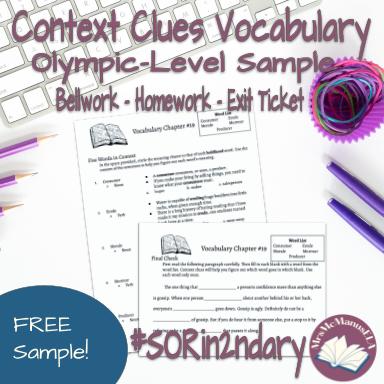
Once students are warmed up, it’s time to strengthen those vocabulary muscles with more deliberate practice. This Olympic Level Vocabulary resource helps students learn new, Olympic-sized vocabulary words, while also practicing using context clues. Students review and apply context clues, word meanings, and, even, spelling and morphology in a way that still feels competitive and fun.
This two week sample looks like my Context Clues Vocabulary Program, designed to move students from quick recognition to deeper understanding of words. In addition to the two week resource, I have also included a relay race puzzle that you can play to review syllabication with these complicated multi-syllabic words. Grab the free sample + puzzle relay race to reinforce word-level knowledge.
Winter Olympics Trivia Treasure Hunt
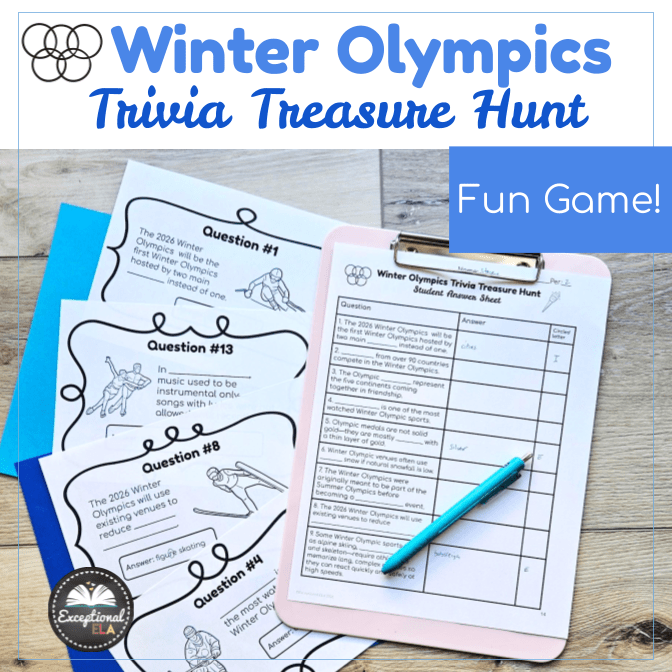
Alright, now that we’ve got students moving and thinking about their word-knowledge, let’s move into some background knowledge building for this unit with the Winter Olympics Trivia Treasure Hunt from Exceptional ELA. It adds more movement, competition, and close reading to build background knowledge about how we’ll be spending the next two weeks.
Students move around the room answering 18 Winter Olympics-themed trivia questions. Each correct answer brings them closer to cracking a secret code, turning reading comprehension, attention to detail, and critical thinking into a fast-paced academic challenge.
Students can start anywhere, work at their own pace, and check their progress as they go—making it ideal for fostering independence while still keeping the competitive spirit alive. Whether you frame it as a timed challenge, a team event, or an individual race to the finish, this low-prep resource transforms learning into an Olympic-style showdown students love.
ELA Skill Sprints: Short, Focused Literacy Training
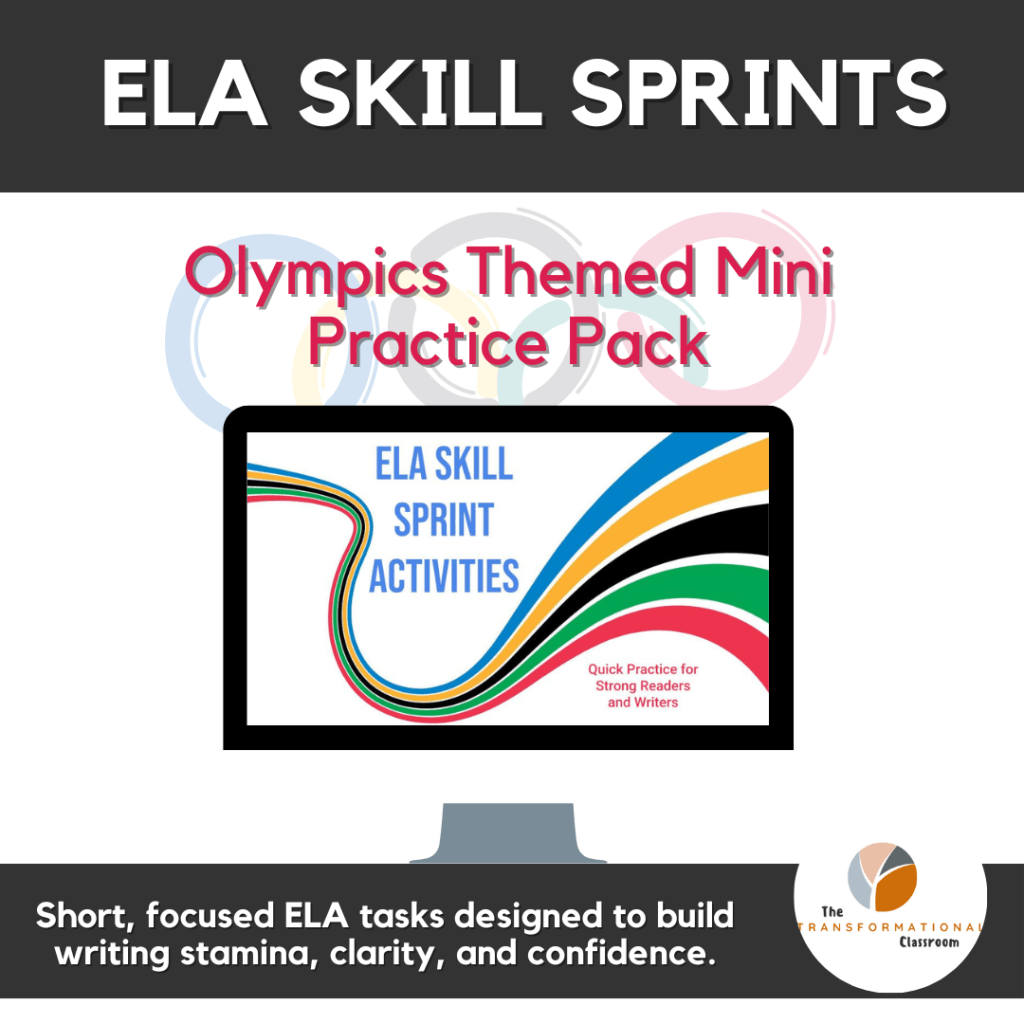
Next up, we’ve got the ELA Skill Sprints from Jen at The Transformational Classroom. These 6–8 minute activities are designed to build reading and writing skills quickly, making them ideal for short, consistent training… the same way athletes build strength through regular practice!
Each sprint follows the same predictable routine so students know what to do:
Warm-Up (1 min): Students read or review the text to prepare.
Sprint (5 min): Students complete the skill-focused task of the sprint: annotating, choosing evidence, revising sentences, or improving word choice.
Cooldown (1–2 min): Students reflect on their work and identify what helped them improve.
This particular resource includes sprints that have Olympics-themed texts included but it can easily be revised, meaning you can use them with any fiction or nonfiction passage that fits your classroom content. It comes with student PDFs and teacher slides, making them easy to use as bell ringers, station work, or quick review activities.
Summer Olympic-Themed Reading Comprehension Practice
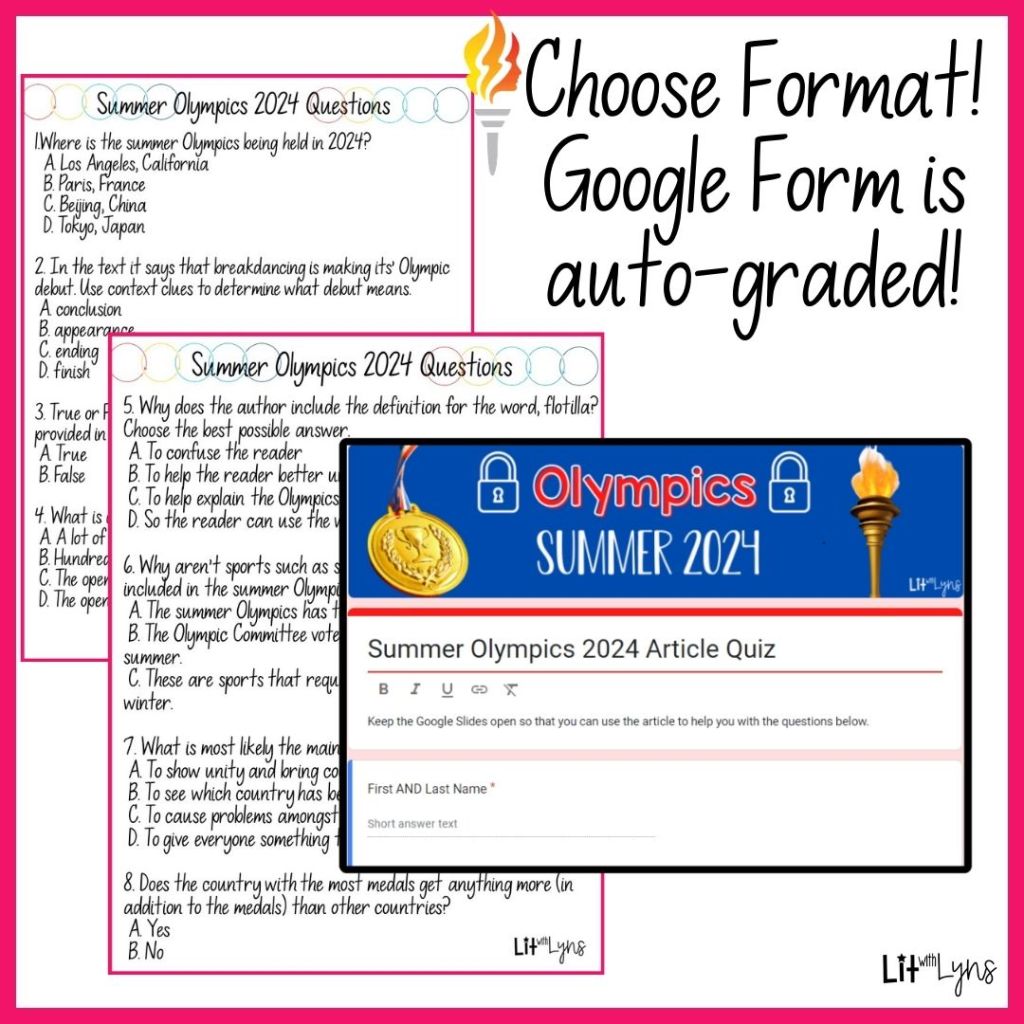
These Summer Olympic-Themed Reading Comprehension activities from Lit with Lyns are perfect for reading comprehension, context clues, writing skills, and much more. The best part… ZERO PREP is required!
Students will read an informational text about the 2024 Summer Olympics and will then take a quiz on the material. If you use the Google Form Quiz, it is auto-graded. Both digital and print are available for each activity.
Next students will research 5 facts about 8 of this year’s Olympians and write the facts on the task cards provided.
Then students will choose 1 of the Olympians from the task cards or an Olympian of their choice to write a 1-2 paragraph mini-biography on. They will be instructed to pay close attention to punctuation, capitalization, spelling, and to also make sure they are citing all information from outside sources.
Go for the Gold Writing Microskills Challenge
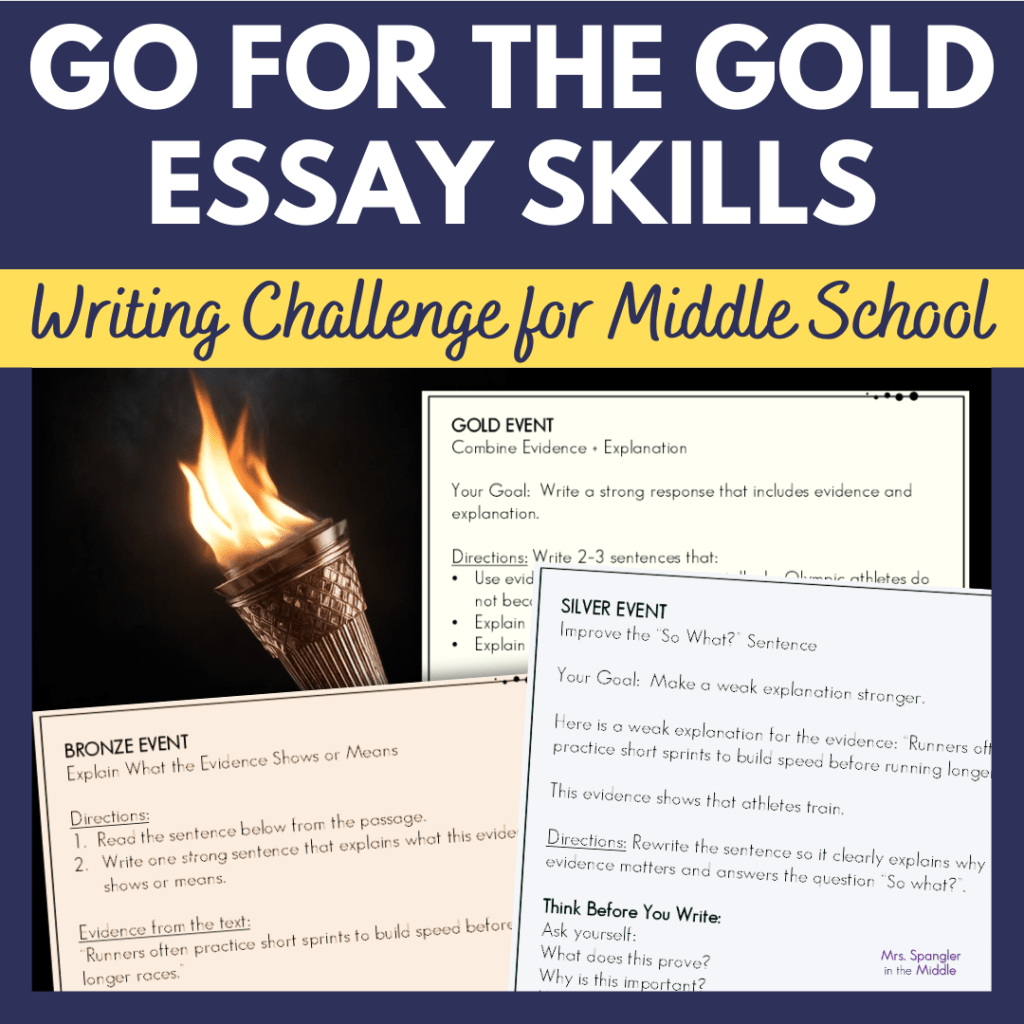
We’ve all seen it happen: students can find evidence in a text, but when it’s time to explain why that evidence matters, their writing falls apart. Explanations stay vague, and strong ideas never quite make it onto the page.
The Go for the Gold Writing Microskills Challenge from Mrs. Spangler in the Middle helps students practice explaining evidence and writing commentary without the pressure of a full essay. Using a short nonfiction passage, students move through three quick writing events—explaining what evidence shows, strengthening weak “so what” sentences, and finally combining evidence and explanation into a complete response. It’s an Olympic-inspired activity that builds essential writing skills while staying practical, manageable, and classroom-ready.
This is targeted, paragraph-level writing training that pays off everywhere. Work those muscles!
Application Events: Reading, Writing, and Thinking Together
Alright, we’ve warmed up. We’ve trained. Now, it’s GAME TIME. These application events push students to perform under pressure, applying their reading and writing skills the same way athletes execute during a meet or match.
Evidence & Inference Game (RI.7.1 – 2026 Winter Games)
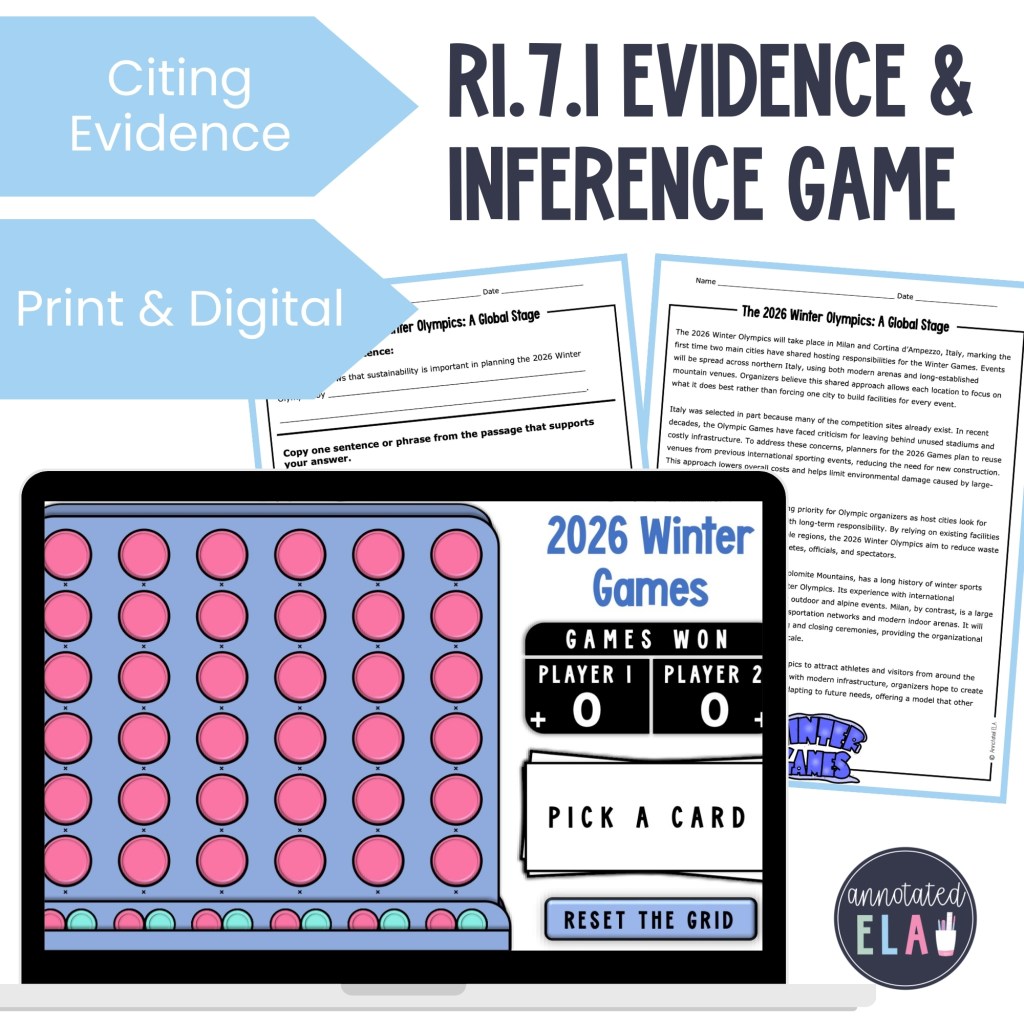
Bring competition and critical thinking together with this engaging Evidence & Inference Game: RI.7.1 – 2026 Winter Games resource from Melissa at Annotated ELA! Students step into the role of reading athletes as they analyze an informational text about the 2026 Winter Games, complete a writing activity, and compete in a digital four-in-a-row game that requires them to select the best textual evidence and make logical inferences.
Before the game, students complete a scaffolded short response that guides them to write a cohesive answer using evidence and explanation. Playing in partners or teams, students answer text-based questions before placing their marker on the digital game board.
This hybrid resource includes a digital game board with printable or digital student pages, making it perfect for centers, small groups, review days, or your Reading/Writing Winter Games events. It’s an interactive way to build evidence-based thinking while keeping students motivated and engaged.
The Underdog Narrative Blueprint
In 1960, a 29-year-old TV producer named Roone Arledge wrote a memo: “We are going to add show business to sports.” Then he invented everything—slow motion, reaction shots, and those athlete profiles that make us cry.
Before Arledge, sports coverage showed the game. After Arledge, it told stories.
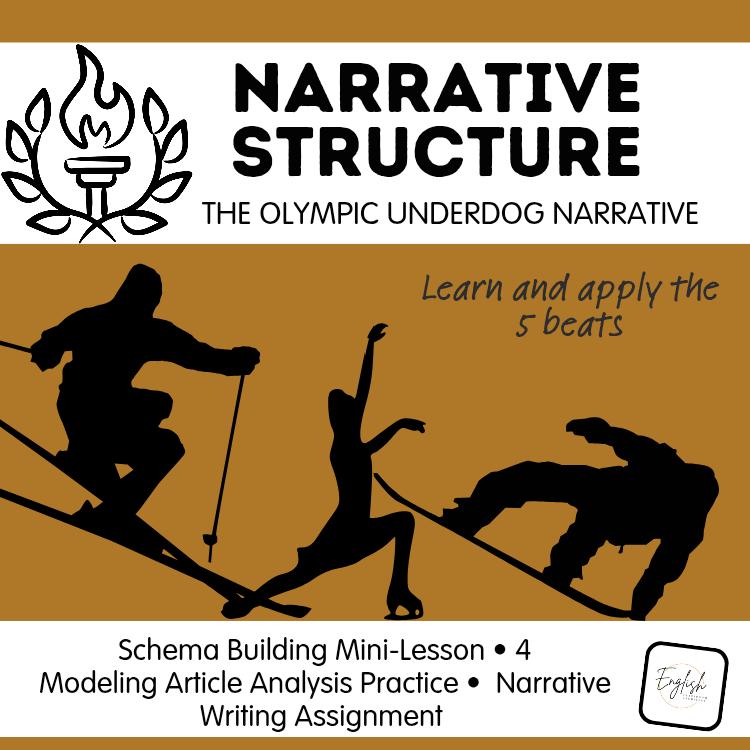
The Underdog Narrative Blueprint from English Classroom Architect teaches your students the six beats Arledge pioneered—Origin, Setback, Mentor, Ticking Clock, Doubt, The Moment—using four real 2026 Olympic athlete profiles. They’ll analyze how writers construct emotional investment, compare how different setback types land differently, and identify craft moves they can steal.
Then they write their own underdog narrative using the same framework.
This lesson helps them see the “up close and personal” narrative structure, the same moves your students will recognize in movies, memoirs, and college application essays.
Sports Celebrity Biography Project
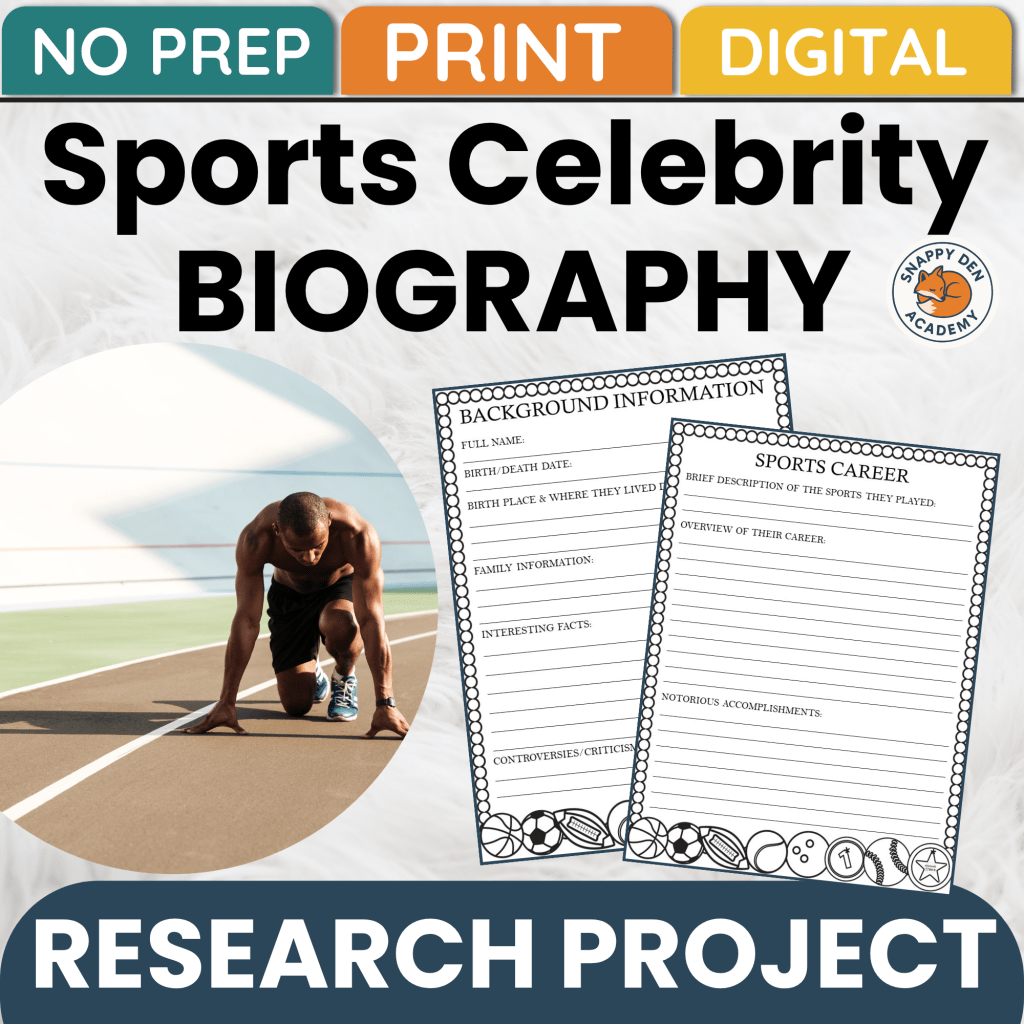
To wrap up the unit, the Sports Celebrity Biography Project from Snappy Den Academy allows students to research famous athletes, analyze their journeys, and celebrate their legacies through narrative and expository writing.
This project brings together:
- Research skills
- Writing structure
- Sentence conventions
- Reflection
It’s a strong culminating event that still fits the Olympic theme.
Bonus Freebie: Create Your Own ELA Escape Room
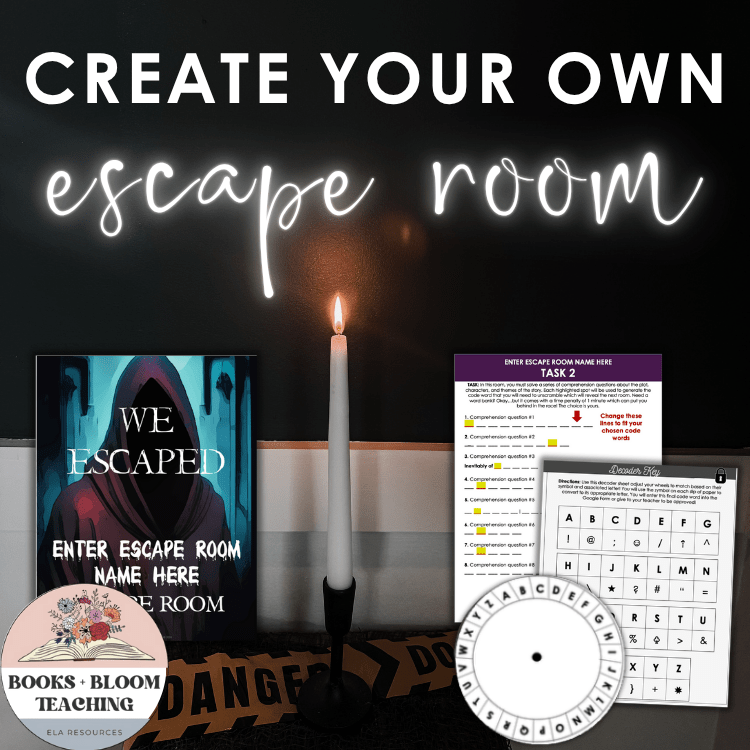
Ready to turn any text into a high-engagement challenge your students actually want to complete… or COMPETE? This Create Your Own Escape Room free resource from Books and Bloom Teaching puts students in charge of the competition while you stay focused on the skills that matter.
Instead of another worksheet, you can design text-based challenges that target key ELA skills like theme, symbolism, character development, and evidence-based reasoning that grab your students’ attention and allows real learning to take place.
Designed to work with any text, this flexible resource fits novels, short stories, nonfiction, review days, test prep, or enrichment. It will give you the tools to adapt and reuse all year long.
Download for free turn any text into an ELA escape room Olympic event!
A Sample 2-Week Training Schedule
This unit is designed to be flexible but here’s one way to structure it:
Week 1: Awareness & Skill Building
- Day 1: Reading Rope Metacognition Lesson + Groovelit Warm-Ups
- Day 2: Morpheme Relay Races + Vocabulary & Word Level Training
- Day 3: Winter Olympics Trivia Treasure Hunt + ELA Skill Sprints
- Day 4: Olympic-Themed Reading Comprehension
- Day 5: Go For the Gold Writing Microskills Challenge
Week 2: Application & Performance
- Day 6: Groovelit warm-up + Skill Sprints
- Day 7: Evidence + Inference Game
- Day 8: Underdog Narrative Blueprint
- Day 9: Sports Celebrity Biography Project
- Day 10: Presentations, Reflection and Create Your Own Escape Room
Why the Reading & Writing Olympics Work
At the end of the day, the Reading & Writing Olympics aren’t about flashy games or themed activities for the sake of engagement. They’re about intentional skill-building. We are giving students repeated, meaningful practice with the exact reading and writing muscles they need to be successful in secondary classrooms. When students know what they’re working on and why it matters, their confidence grows right alongside their skills.
This two-week unit is designed to be flexible. Use every activity, or pick and choose the events that fit your class, your schedule, and your students’ needs. Whether you’re filling the gap between units, gearing up for testing season, or just looking for a way to make skill practice more engaging, the Reading & Writing Olympics gives you a structure that works, without adding to your prep load.
So light the torch, press play, and let your students train. You might be surprised by how much growth you see when practice feels purposeful and performance feels achievable.


Leave a comment