The Wipebook Reusable Flipchart is one of the most used supplies in my classroom! If you’ve heard of them or seen them in action, you know how cool they are… if you don’t know them, well, they’re pretty amazing. Imagine one of your old-school paper flip charts but as a dry-erase. They are powerful tools for classroom use and they have helped me turn abstract ELA skills into collaborative, visible thinking for my students. In my 9th grade English classroom, our small-group Wipebooks get students collaborating with their peers by breaking down complex texts, revising thoughtfully, and engaging in deeper discussions without the pressure of whole-class performance. And I would love to help you bring them to your own secondary ELA classroom. So here are ten flexible, high-impact ways that Wipebooks can bring energy and purpose to your small-group ELA instruction.
1. Annotate a Passage Together
TEACH students to annotate with a Wipebook Annotation Station. I print the same passage many times, attach them to the Wipebook, with just one thing to look for, and have students rotate through in 3-5 minute increments. Instead of telling students to annotate a passage on their own (and highlighting the whole dang thing), they work with a small group to talk it out in front of a low stakes dry erase surface.
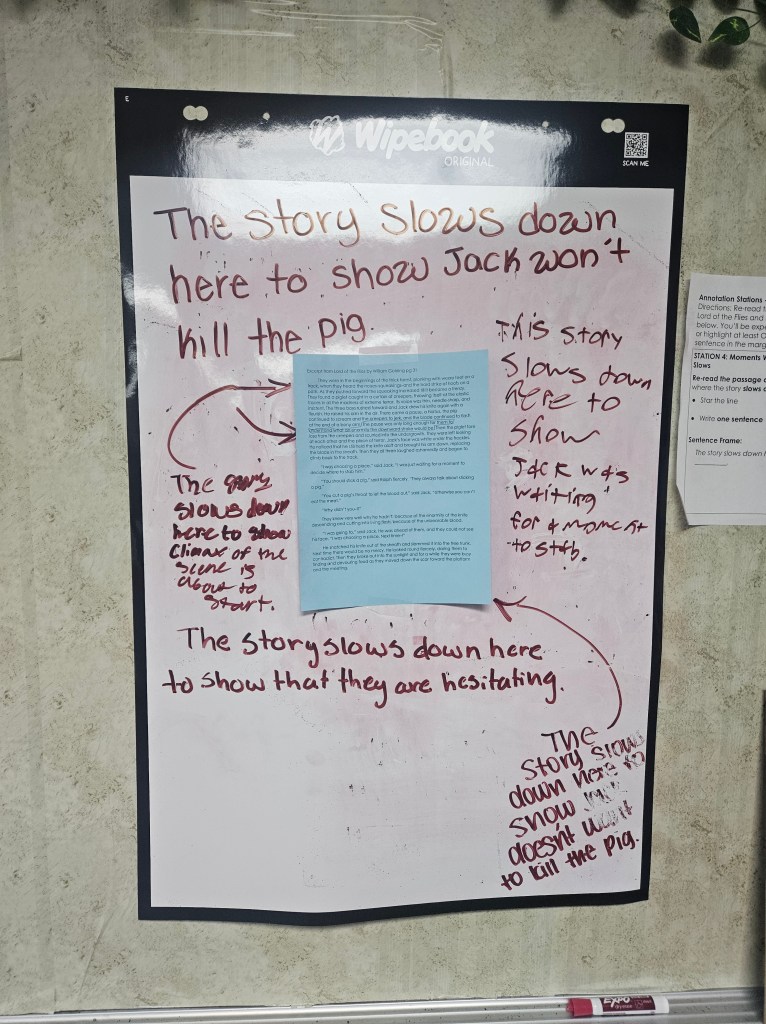
Close reading becomes far more engaging when students can mark up a passage together on a dry erase board. In small groups, students identify key words, tone shifts, figurative language, or patterns and write their annotations collaboratively. Because the board is erasable and shared, students take risks, debate what matters, and refine their thinking as they go. Watching their collective annotations fill the board helps them see how meaning is constructed not just consumed.
2. Paraphrasing Practice That’s Actually Kind of Fun
Maybe you don’t want students to move around, station-style. Park each group at a Wipebook and give them a tough chunk of text to paraphrase. Ask them to fill in the words that they don’t know with synonyms and then move the words around, modifying the sentence structure to make the whole thing make more sense to them.
Alternatively, use this idea with a “messy” paragraph that they need to revise. Their Wipebook turns into an editing studio where they can work on revision together. I give small groups a short paragraph that needs work (vague ideas, weak evidence, awkward sentences) and ask them to revise it together on the Wipebook.
Instead of vague language, unclear ideas, and weak evidence, students rewrite the paragraph collaboratively, discussing style, organization, and clarity as they go. Because the surface is erasable, students are much more willing to cut, rewrite, and try again. They talk through word choice, sentence structure, and clarity instead of rushing to a final draft. Revision becomes visible, collaborative, and low stakes, exactly what it needs to be if students are going to get better at it.
3. List, Group, Label
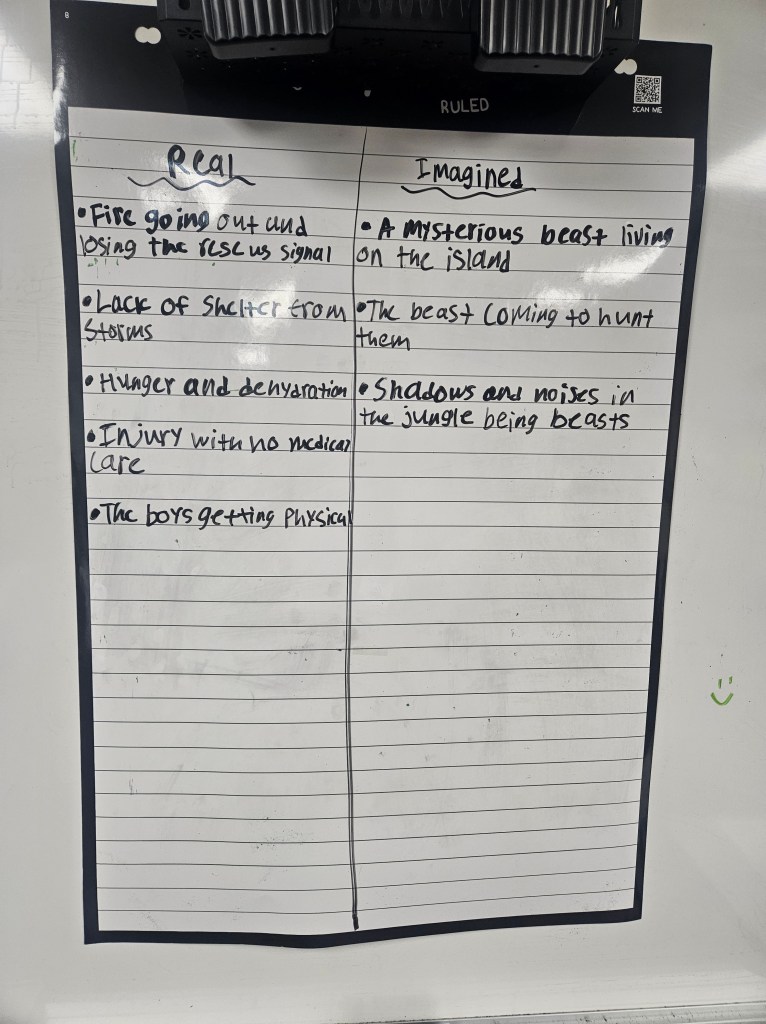
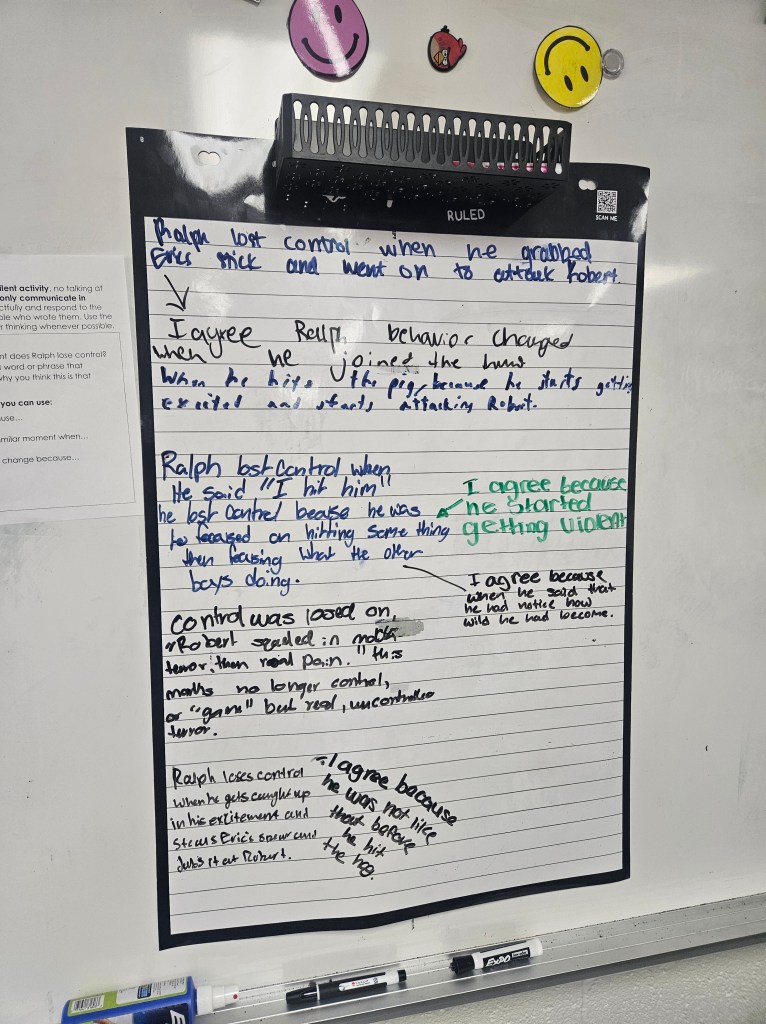
Essentially, the Wipebook is a canvas for anchor charts that you and your students can use over and over again. I have mine set up in permanent spaces within my classroom. One way that we use them all of the time is to list things that we notice in the literature that we’re reading.
As we read Lord of the Flies, for example, we listed real threats that the boys were up against vs. imagined fears that weren’t really something they needed to be concerned about.
As we closely read a scene in Romeo and Juliet, we listed light and dark imagery so that we could use it for evidence for a CER (claim, evidence, reasoning) paragraph. Anything that you would do with a piece of chart paper can be done with a Wipebook. And the best part is that you scan the QR code at the top and it saves it for you to come back to… instead of having to take a thousand pictures.
4. Sentence Combining & Sentence Surgery
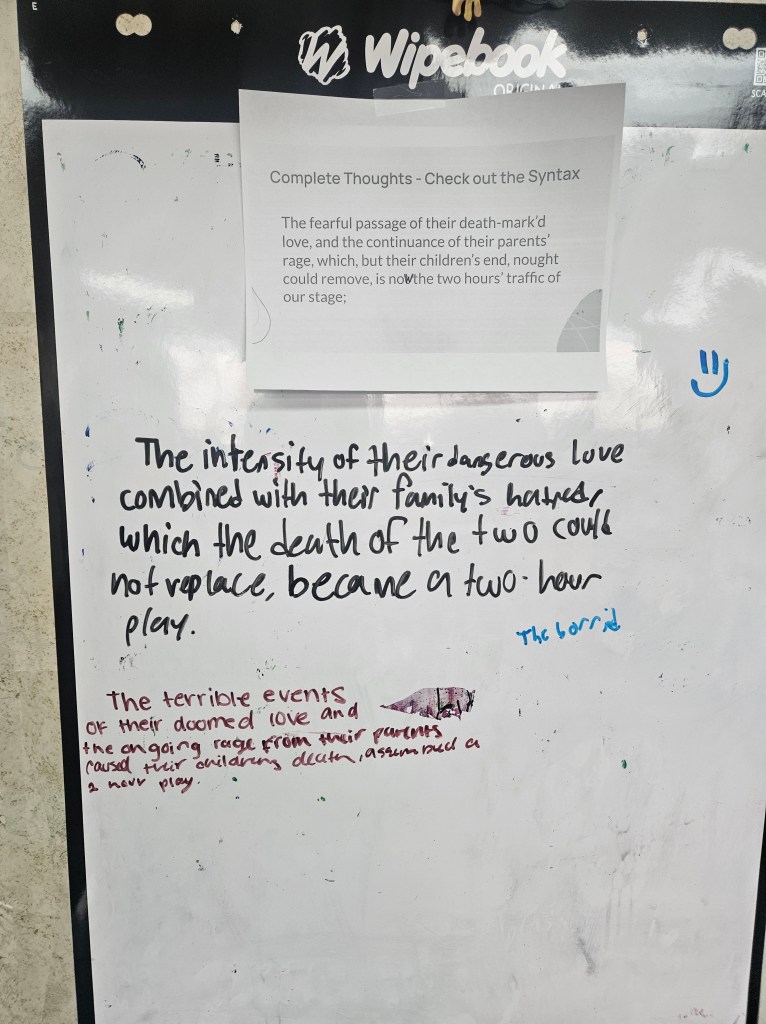
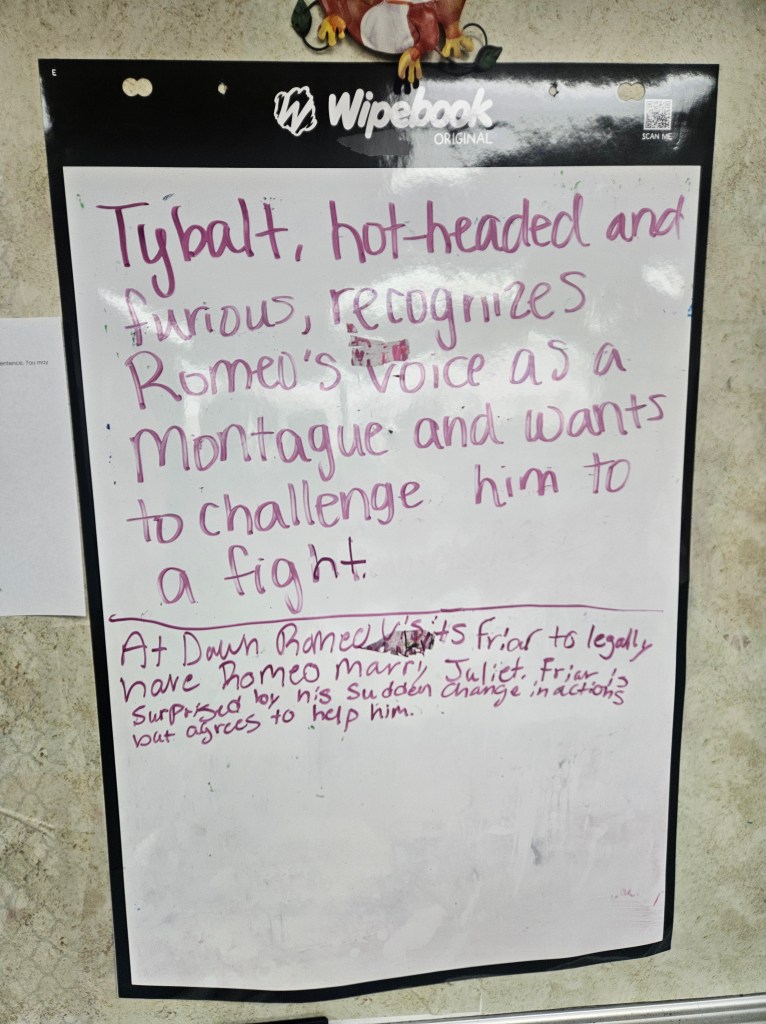
Sentence work can feel tedious, but it doesn’t have to. This is probably my most used activity for Wipebooks. Sentence combining and sentence surgery gives students space to play with language, which… if you’ve been around for a while, you know is one of my favorite things! I’ll give groups a few choppy sentences to combine or one overloaded sentence that needs trimming and restructuring.
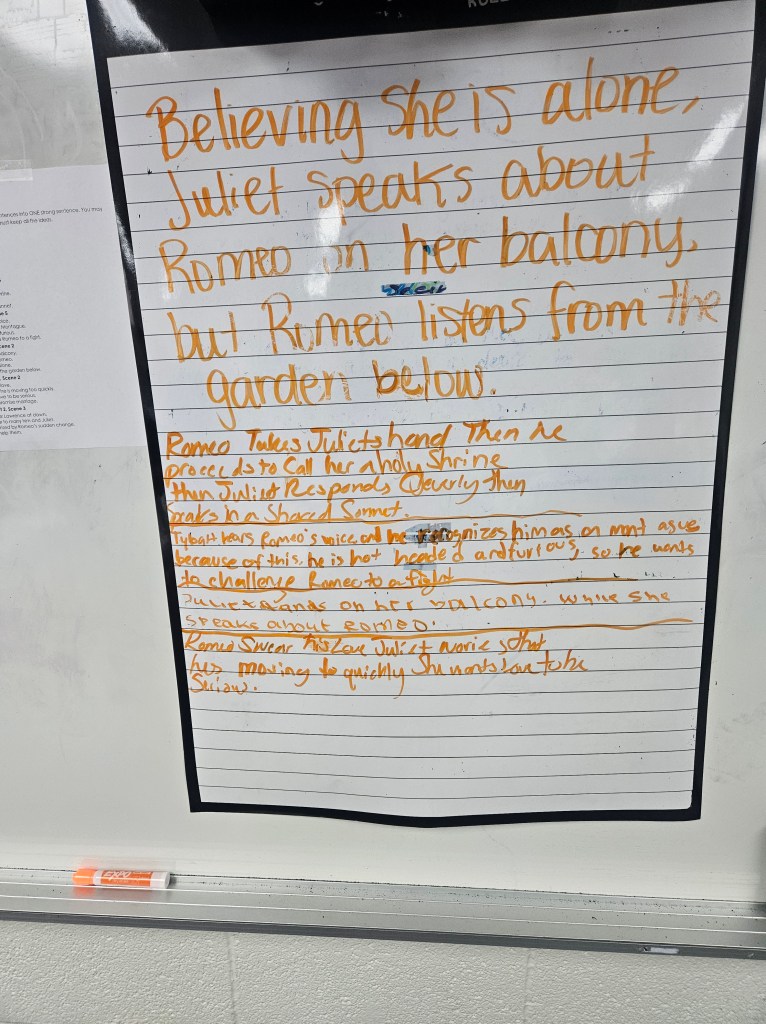
Students write, erase, rearrange, and rewrite (over and over again) as they talk through their choices. Instead of asking, “Is this right?” they start asking, “Does this sound better?” That shift matters so much as they get better and better with syntax. Wipebooks make sentence-level decisions visible and flexible, which helps students build confidence and control as writers.
5. Collaborative Discussion Boards
Wipebooks can anchor small-group discussions by giving students a place to collect their ideas visibly. Not every student is ready to jump into a full-class discussion, and that’s okay. A shared Wipebook gives small groups a place to focus their thinking while they talk. When we do this in my class, I’ll pose a question or problem, and pairs or groups use the Wipebook to track their own claims, evidence, and counterpoints, or write as a discussion unfolds around them.
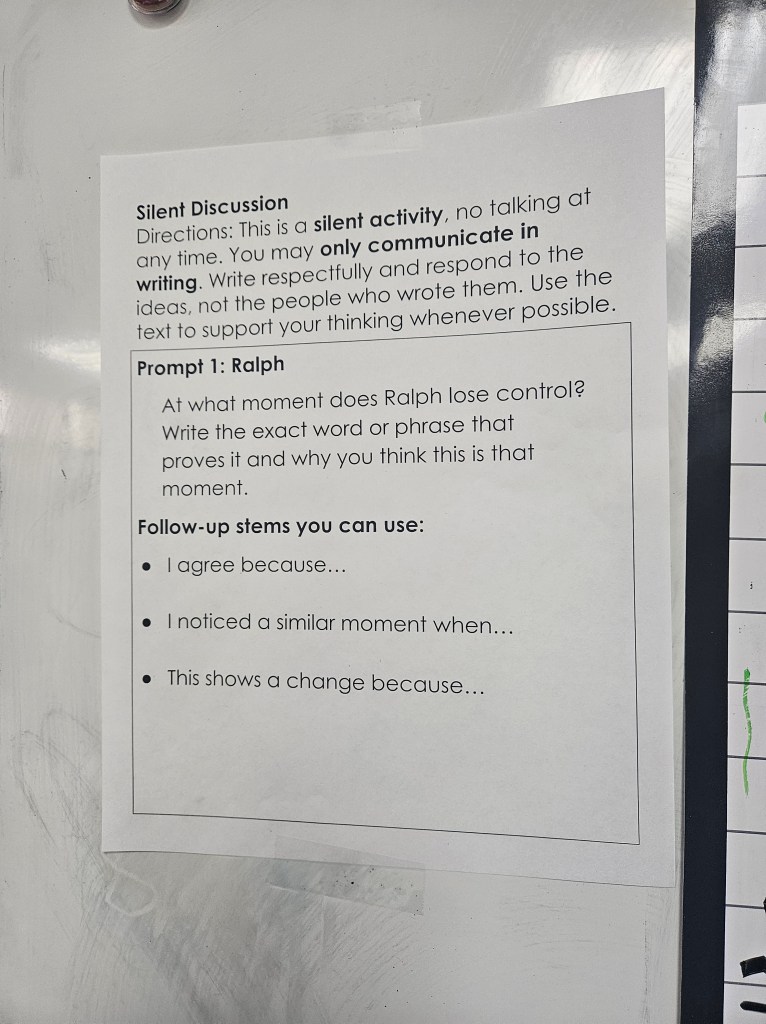
This keeps conversations focused and purposeful. It also ensures that everyone contributes to the thinking, even if they’re not willing to do anyone of the talking. The Wipebook becomes a record of the group’s reasoning, not just a list of answers.
6. Vocabulary Connections to Build Transfer
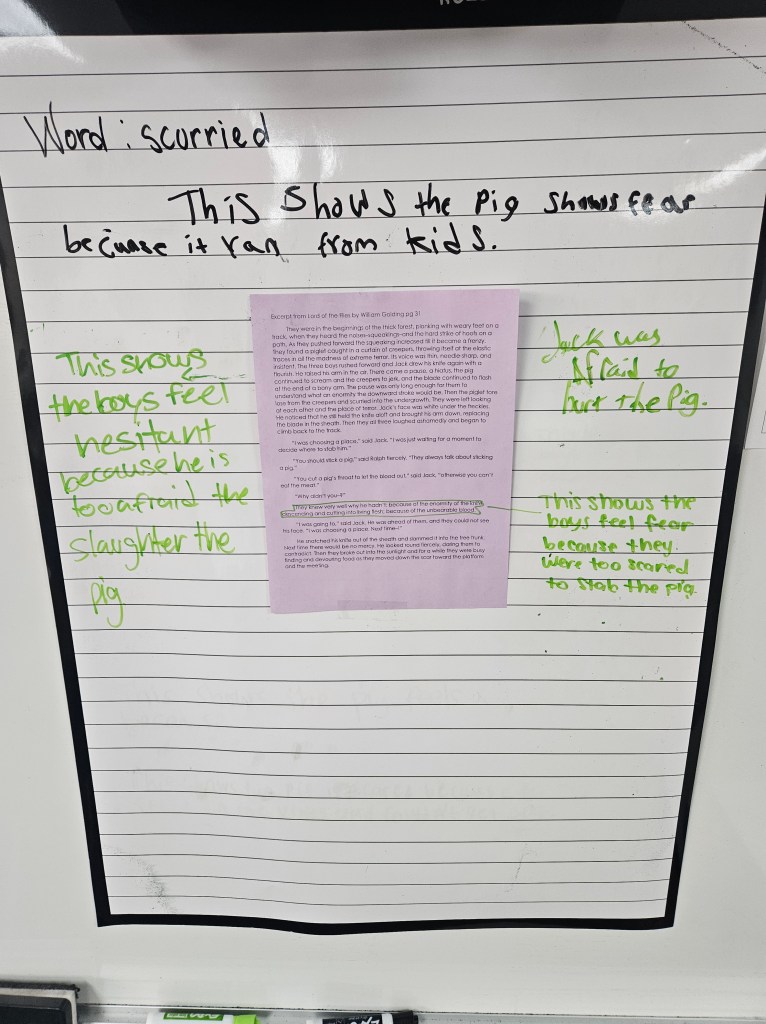
Vocabulary and morphology instruction becomes hands-on when secondary students use Wipebooks and see how words connect across texts and contexts. Neither of these things stick when taught in isolation.
I have small groups work through how a tough word functions inside a sentence or whole text rather than starting with a definition. Students write the word, track how it’s used across a few lines or moments, and talk through what it reveals about the character or scene to determine a definition.
Because everything is written out and visible, students start to notice relationships between words on their own. This kind of word work supports vocabulary growth and reading comprehension, without feeling like another worksheet. This helps our teenage students recognize morphological patterns and transfer them to new texts. The whiteboard keeps the task playful and fast-paced, making it perfect for warm-ups or station rotations.
7. Theme Seed Word Analysis
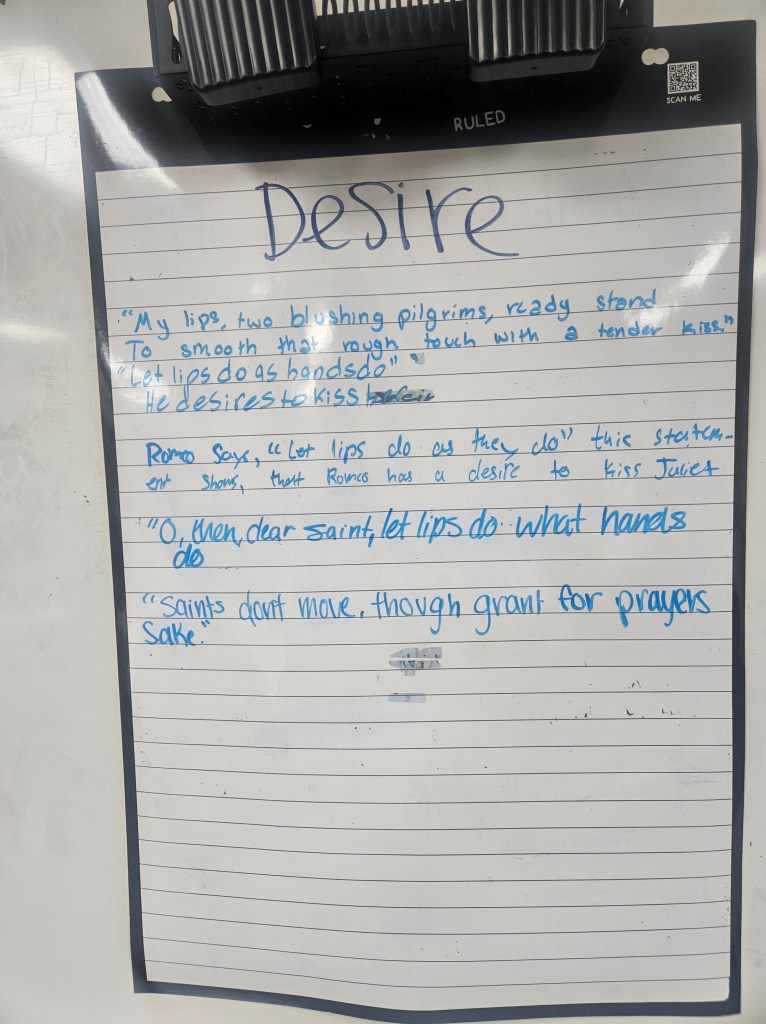
Theme can feel really abstract, especially for younger secondary students. Starting with a single “seed word” gives students something concrete to work with. On the Wipebooks, I’ll leave a “seed” of a theme and then have groups explore how that idea develops within a story, writing evidence on the Wipebook as we read. You can have students stay in one place and find more than one piece of evidence, or have them rotate to different “seed” words. Then, have them expand on the “seed” word by explaining what the author thinks about that topic.
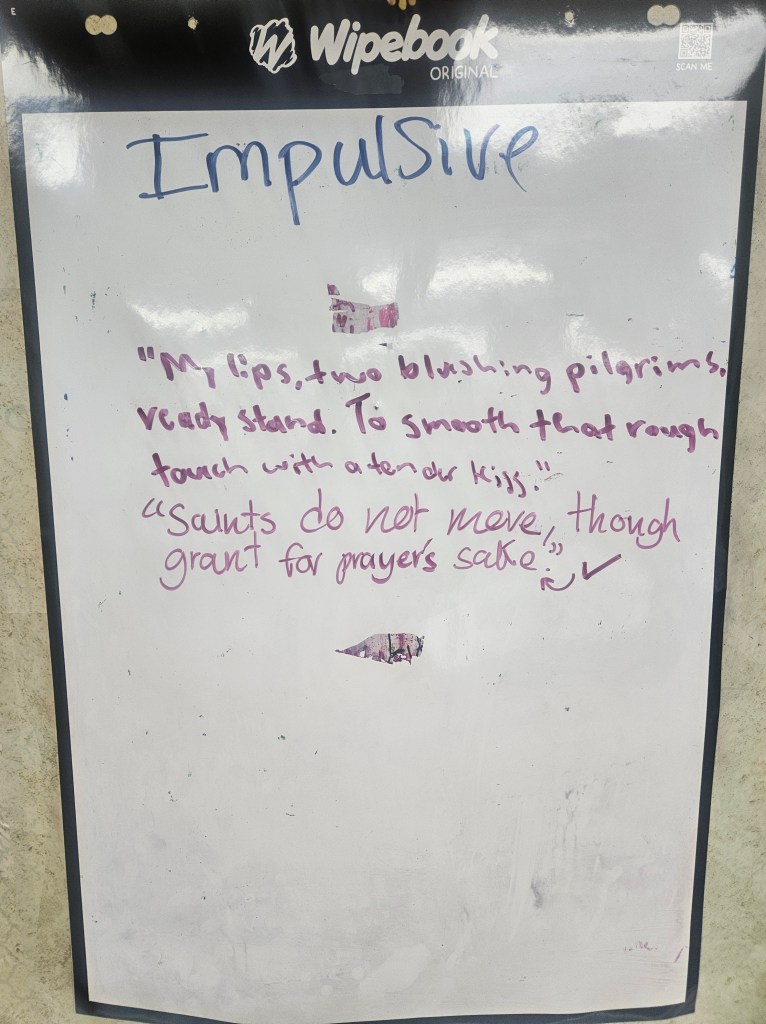
Instead of hunting for a one-sentence theme statement, students focus on patterns and progression. By the time they’re ready to write, the thinking is already there on the Wipebook.
8. Character Mapping & Relationship Diagrams
Whiteboards are perfect for visualizing character motivations and relationships. Let’s be honest, character analysis often stops at just listing a bunch of traits, but Wipebooks help students go deeper, actually thinking through what the character is doing and how they’re acting. Have students map character motivations, relationships, conflicts, and turning points using arrows, labels, and brief notes to show how one decision leads to another. The visual layout helps them see development and cause-and-effect, not just isolated details.
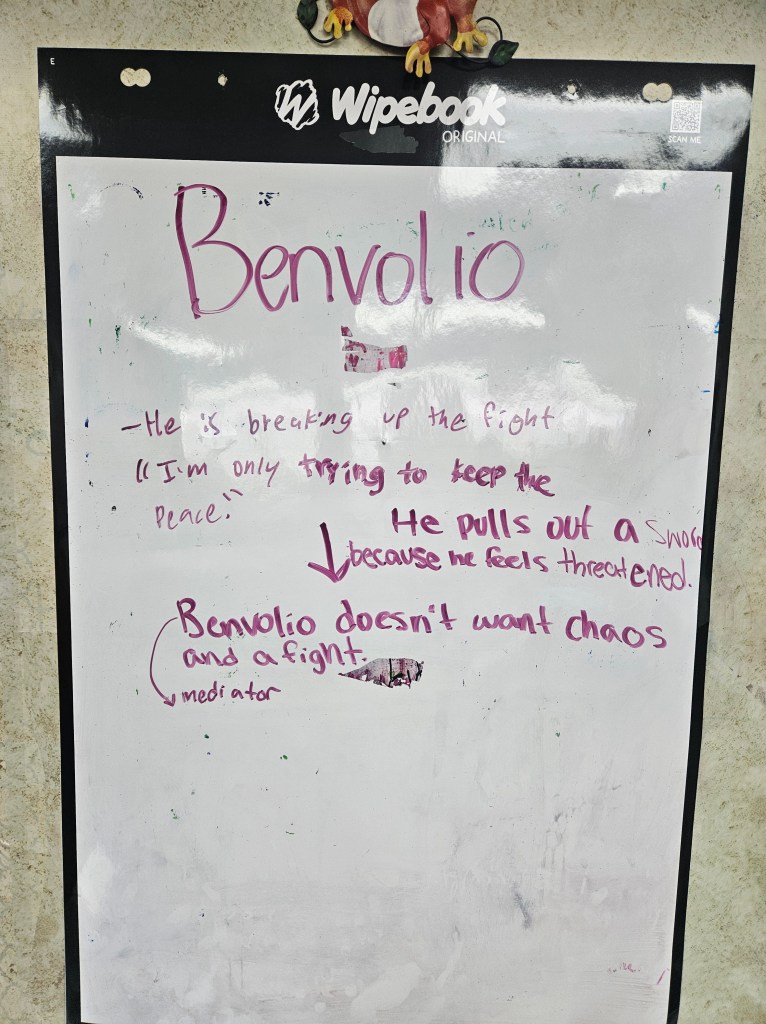
Because the map is shared and editable, students talk through disagreements, revise ideas, and make connections between events and character choices. And because space is limited, they can practice distilling information to what matters most. These maps double as excellent pre-writing tools for character analysis essays.
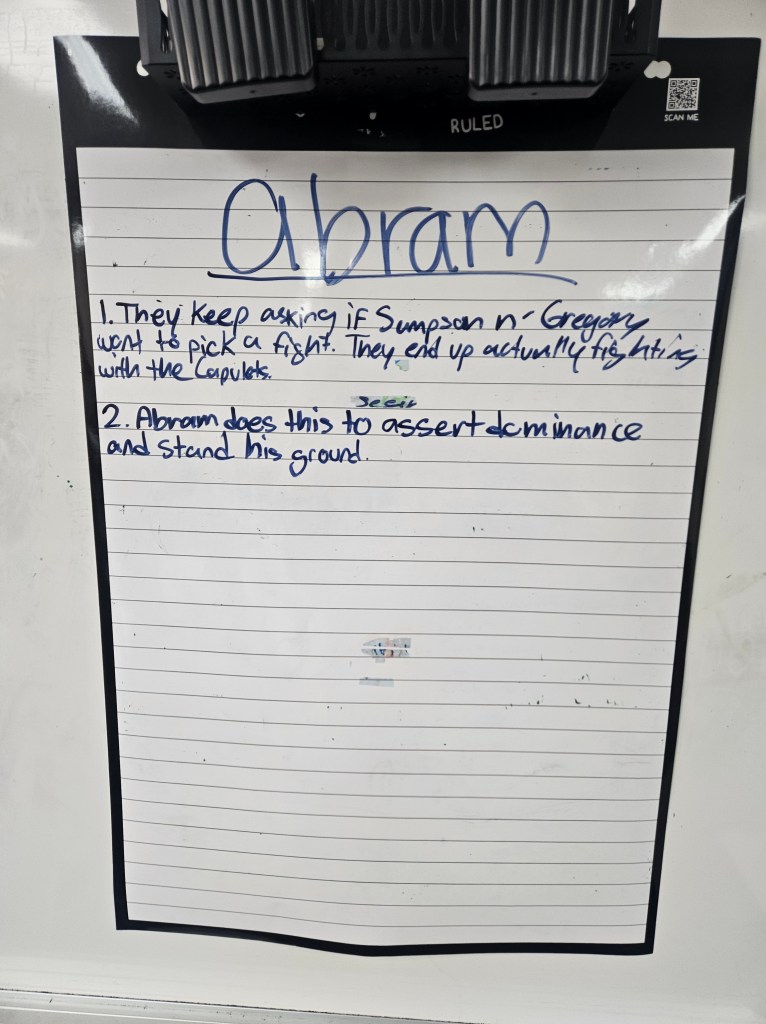
9. Slow Down Scenes by Story-Boarding
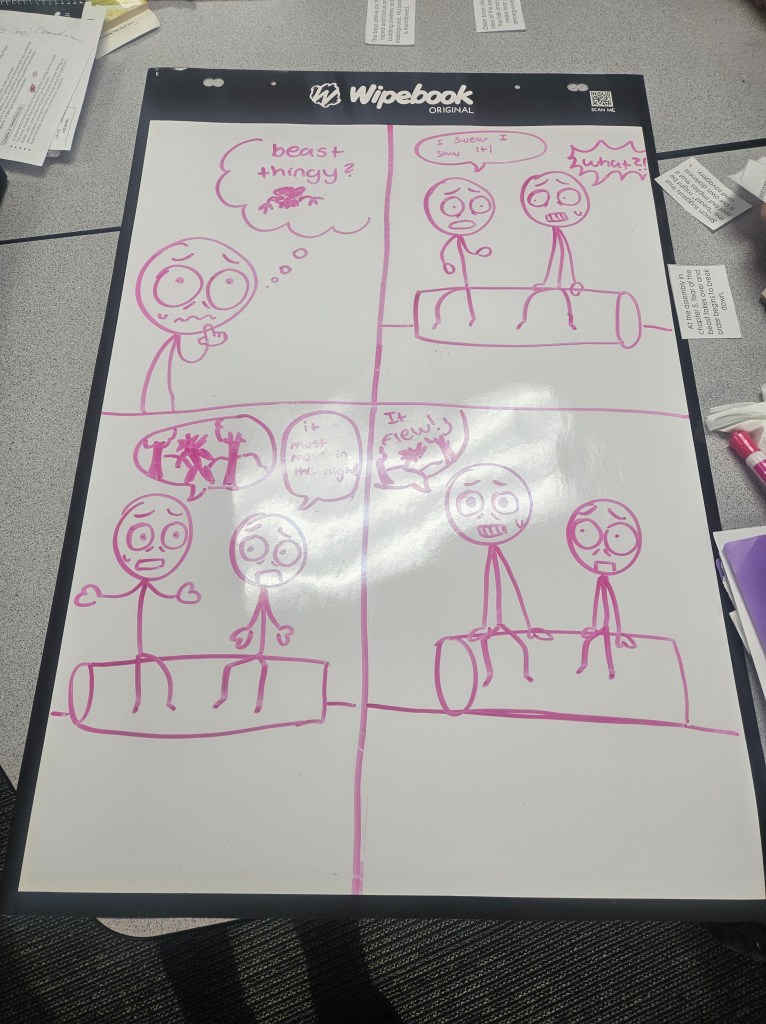
Some scenes move quickly, but the meaning doesn’t. When that happens, Wipebooks help students slow down without getting stuck. In small groups, students break a scene into key moments and track what changes from one moment to the next.
This isn’t about drawing or retelling the plot. It’s about helping students see how a scene works and why it matters. The Wipebook gives them space to organize their thinking, revise it, and explain it clearly before moving into discussion or writing.
10. Argument / Counterargument Debates
Finally, Wipebooks are perfect for argument work because they make reasoning visible and easy to revise. Small groups use them to test claims, gather evidence, and write counterarguments side by side.
This encourages students to think in terms of nuance rather than right answers. Writing both sides of an argument helps students strengthen their analytical thinking long before they move into a formal essay. You can present a claim connected to the text, and have each group craft both an argument and a counterargument with supporting evidence. Then do a short gallery-walk to share ideas. This dual perspective encourages students to wrestle with tension and nuance, not just defend one side. When groups present their boards, the class can compare reasoning, evidence, and rhetorical strategies before moving into full written arguments.
Put your name in for a weekly raffle of Wipebooks and lower the pressure while raising the level of thinking in your secondary ELA classroom. They give students space to talk, revise, and rethink, which are all essential skills in ELA.
When used intentionally, Wipebooks aren’t just a classroom novelty. They’re a powerful tool for making student thinking visible. They make ELA instruction less abstract and more active, and they keep every group engaged in meaningful work instead of passive conversation. Whether you’re analyzing a scene, refining a sentence, or exploring vocabulary roots, small-group whiteboards transform your classroom into a space where thinking is visible, collaborative, and energizing.


Leave a comment