
The weeks before Thanksgiving (and again before winter break) can feel… well, a little chaotic. The students are buzzing, the schedule is off, and let’s be honest… you could use your own breather.
But “just showing a movie” in any class is usually a no-go.
That’s exactly why a group of secondary ELA teachers and I teamed up for something special! A Movie Marathon in ELA. We have a collection of really incredible blog posts and freebies related to movies, shorts and documentaries from various genres and formats. This collection of movie and media-based lessons are totally standards aligned and classroom friendly and they will absolutely get you through the chaos of the next few weeks in your secondary ELA classroom.
These lessons hit the sweet spot between fun and functional. You’ll get fresh ways to teach analysis, theme, argument (and so much more), while still embracing the chaos of a movie week right before a break. And yes, each of the blog posts linked below includes a freebie that you can use right away!
Which one are you going to show next week? Leave a comment below and let us know!
The Movie Marathon Line-Up
Holiday Season Ted Talks: Essential ELA Task Cards
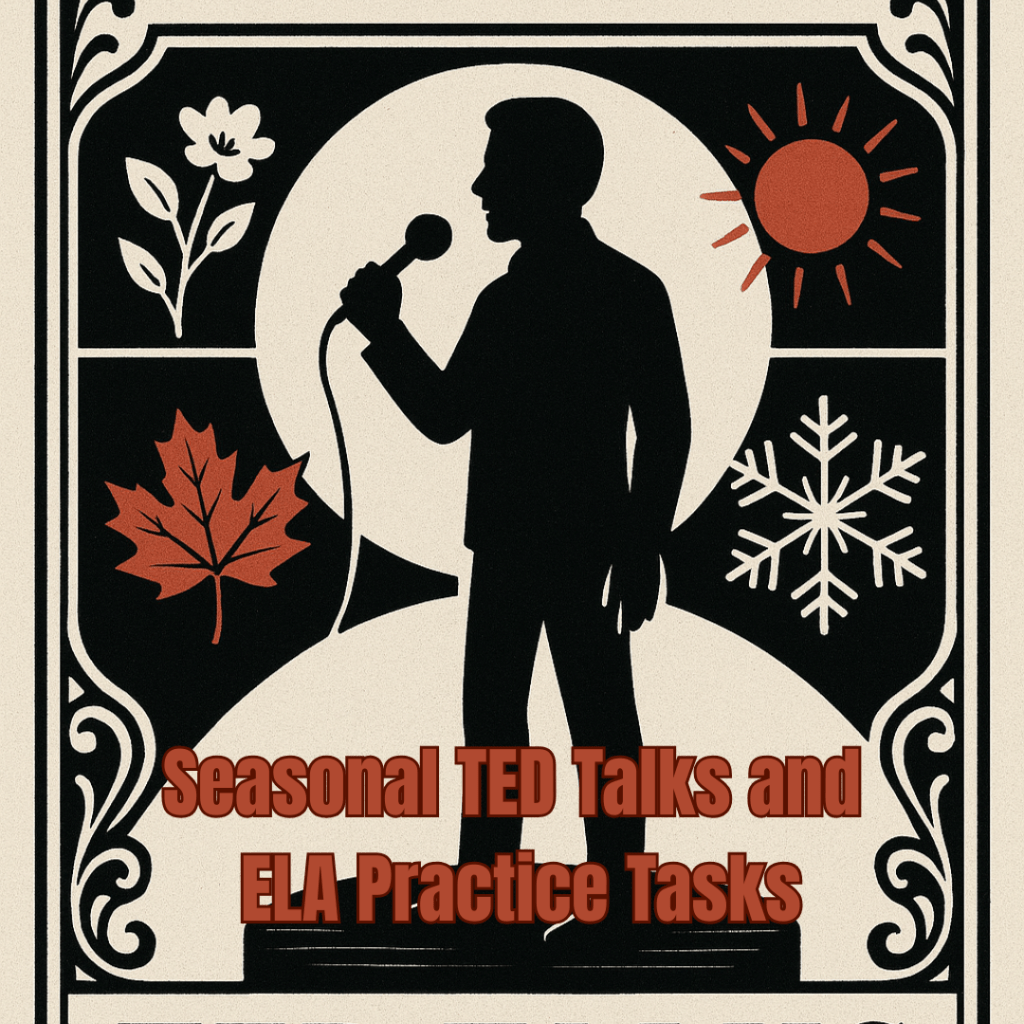
One of the most versatile offerings in this ELA Movie Marathon comes from Laura, at Language Arts Teachers. Instead of relying on full-length films during the holiday stretch, this resource uses short, curated TED Talks on themes like gratitude, generosity, miracles, and kindness. The talks are paired with 24 ready-to-go task cards: six for reading, writing, speaking, and listening. The goal is that students engage deeply with the ideas portrayed instead of simply watching a video.
These lessons are ideal for grades 6–12: the talks are relatable and accessible, and the tasks are standards-aligned across multiple strands. You can use them as stations or group rotations, and because the talks are only five to ten minutes long, they make perfect sense for tight class time in November or December. Best of all, they give students something thoughtful to work with during that awkward pre-holiday window without turning in into a “just watch” (so I can have some peace and quiet) day.
Read about this at Language Arts Teachers.
And click here to go right to the downloadable Task Cards.
Teaching Bias & Persuasion with 12 Angry Men
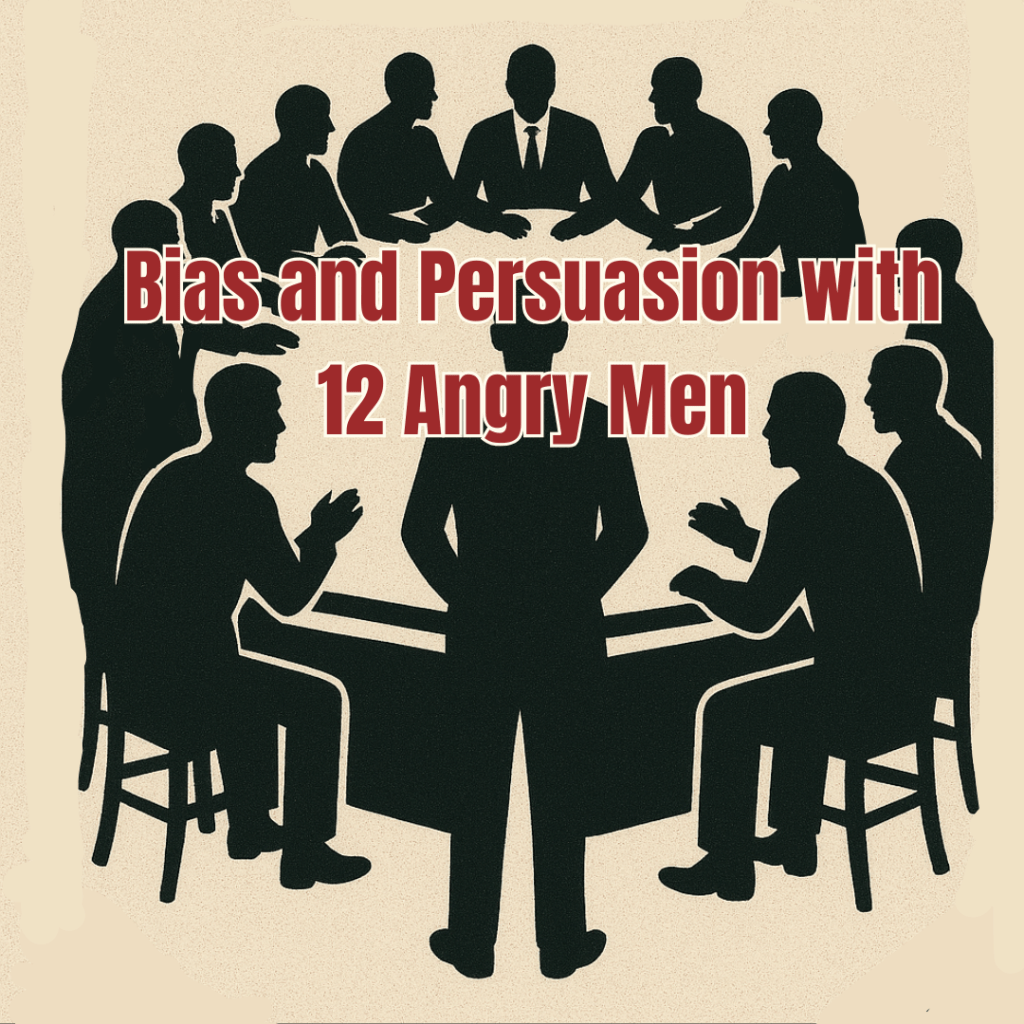
In 12 Angry Men, racial bias, moral responsibility, and persuasion are all playing out inside a single jury room. This is one of my favorite units to teach and my friend, Melissa at Annotated ELA is showing us how teachers can use this film to make those really abstract ideas more concrete. Her lesson guides help students notice how jurors’ backgrounds and personal assumptions drive their logic, how emotional appeals outweigh facts, and how credibility is built or destroyed by tone and delivery.
What makes this unit especially effective is its structure: students watch short, pivotal scenes, track rhetorical appeals (ethos, pathos, logos), and note logical fallacies. From there, they map bias using a “Bias & Perspective” chart and connect their observations to nonfiction texts or op-ed articles before moving into a final argumentative writing task. The goal is not simply to write an essay, but to ask a deeper question: “To what extent is justice served in 12 Angry Men?” And, then, support that answer with both film and textual evidence.
Read Melissa’s take on 12 Angry Men on her blog,
and download her Free 12 Angry Men Analysis Pack here.
Introducing Ecocriticism with Films
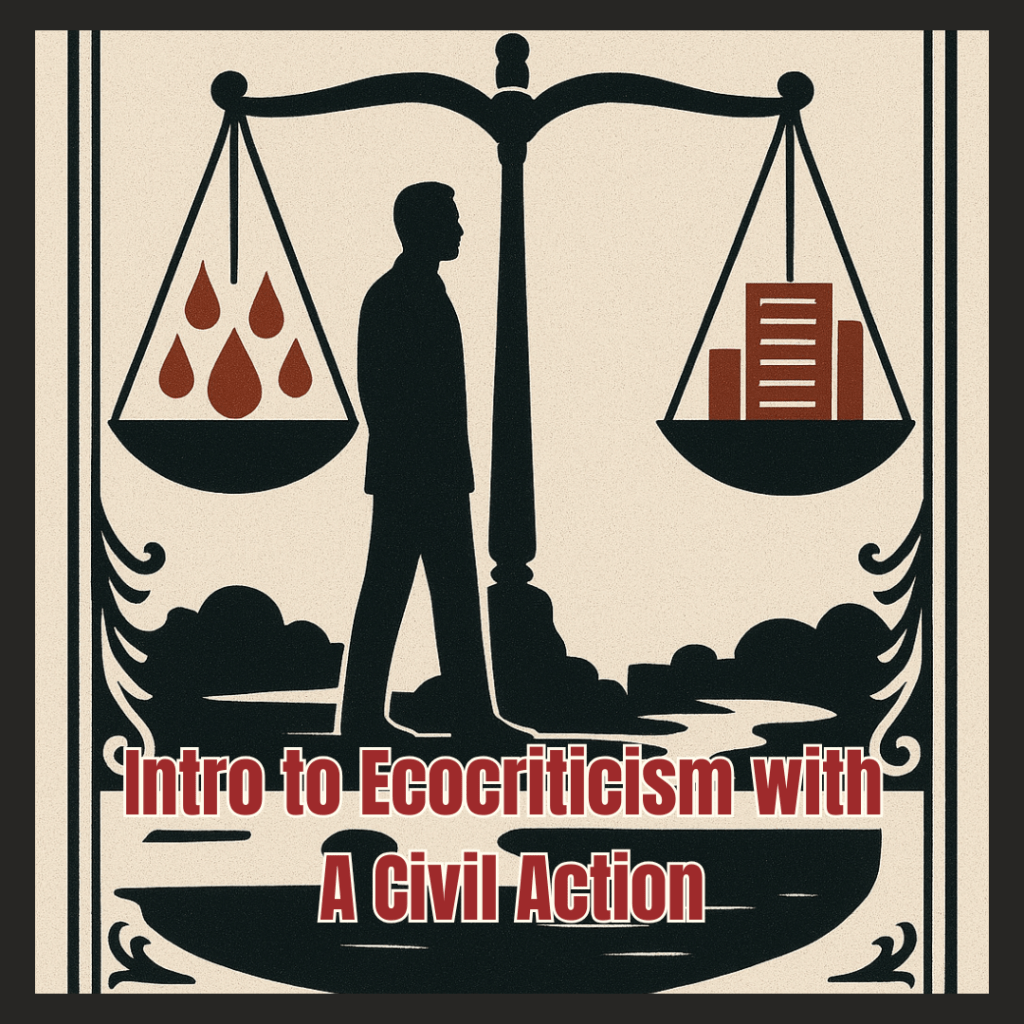
Lauralee at Language Arts Classroom is introducing us to ecocriticism–something that I will admit to knowing nothing about–by using films as a bridge to connect literary theory with real-world environmental issues. Her blog defines ecocriticism as the study of literature and the natural world, and suggests that movies are a powerful way to make that lens accessible for those of us that need some scaffolding on the subject (🙋🏻♀️).
Lauralee explains that many students don’t see themselves in traditional literary criticism. I can definitely relate. I loved my lit theory class in college but I was pretty far removed from it 15 years ago and times have changed even more so since then. BUT our students DO care about the environment, so bringing in ecological themes through film helps them engage in deeper analysis.
Lauralee’s free resource offers a movie guide for the film Civil Action. It also connects ecocritical thinking to texts by suggesting literature like Ray Bradbury’s “There Comes Soft Rains,” so you can tie film discussion into literary study. I think this approach could work for any grade from 6-12. You can introduce the concept broadly to middle school students or take a more nuanced, interdisciplinary route with high schoolers who might be ready to explore how human actions affect the environment on a global scale. I kind of (and by kind of, I mean ABSOLUTELY) love it!
Read Lauralee’s stellar blog post about Ecocriticism here,
and download her Movie Guide for Civil Action here.
Beyond the Book: A Freak the Mighty Book and Movie Analysis Socratic Seminar
If you teach Freak the Mighty, The Hungry Teacher is sharing a free mini-unit that helps you turn the movie into a meaningful text for comparison. Instead of treating the movie as a break from the book, this resource helps students look at the film as a companion text. Students explore how characters are portrayed, how key scenes shift in tone or pacing, and what the movie adds to or changes from the novel.
Students learn how to craft strong questions, view the film with purpose, and participate in a structured Socratic Seminar that draws on both the novel and the movie. The heart of the resource is the student-led discussion. They spend time developing interpretive questions, take notes while watching, and use both the book and the film to support their thinking during the seminar. It is a great option for the short weeks before a holiday or any time you want students to engage more deeply. The work feels purposeful, and the discussion piece encourages students to take ownership of the conversation while still grounding everything in strong literacy skills. This “just watch a movie” activity feels like real academic work, while the movie hook keeps students THOROUGHLY engaged.
Read Martina’s blog post about it.
Grab the free Socratic Seminar Resource.
Before You Meet Scrooge: Background Building for A Christmas Carol

Lisa at Mrs. Spangler in the Middle knows the importance of building background knowledge! And she’s offering up a free prediction activity that does just that before students begin reading A Christmas Carol by Charles Dickens. Before diving into the text, students watch a video about Victorian England and Dickens so that they can make predictions about Scrooge’s character and his possible transformation. This strategy helps them activate prior knowledge and make meaningful inferences rather than just passively starting the story. It is great for scaffolding comprehension, which you know I LOVE!
The activity gives teachers a low-prep way to spark curiosity and discussion on day one of A Christmas Carol unit. It sets the tone for deeper exploration of themes like redemption and empathy, while grounding students in Scrooge’s world through thoughtful, standards-aligned scaffolding
Check out Mrs. Spangler’s full post about it!
And download her Before You Meet Scrooge short video lesson.
It’s A Wonderful Life and Critical Analysis of Flawed Classics
This one is a really interesting read! Danielle at English Classroom Architect is reframing It’s a Wonderful Life, for us, as more than just a holiday classic. She argues that the film is a “flawed classic” with deep thematic resonance. Themes of regret, self-worth, community, and sacrifice make it a powerful text for English classes of all ages and it should be analyzed just like in a Civil Action is above.
Danielle always has ideas that make me examine my practice and this one is no different. Instead of just teaching the text (in this case, a classic holiday movie), she argues that the movie is a great way to hook and engage students. But then, to use it as an opportunity to teach critical thinking in a way that AI can’t replicate. This is another really great addition to our Movie Marathon in ELA.
Go take a look at Danielle’s blog post.
and then grab her Meaningful December Film Analysis resource.
The Definitive Movie Clip Guide for Using The Princess Bride in ELA

My contribution to this Movie Marathon in ELA is from The Princess Bride. In my humble opinion, it is a nearly perfect movie for any ELA classroom. The film blends fantasy, adventure, romance, satire, and heroism in a way that invites meaningful literary discussion without feeling like you’re “just showing a movie.” The layered humor and rich character motives make it a smart way to explore genre, narrative structure, and character archetypes in class.
Because the story is so well constructed, students can analyze it deeply. From Inigo’s quest for revenge, to Westley’s devotion, to the satire of classic fairy-tale tropes, its got a little bit of everything. Plus, it works beautifully whether you’re using the full movie or just a clip or two during one class period.
Check out my full post about why this is the best movie for ELA.
and download the definitive clip guide + worksheets.
The Hunger Games as a Thanksgiving Movie?!
I never would have thought of The Hunger Games as a Thanksgiving movie but here it is and I love it. Ashley at Building Book Love recommends taking the day before Thanksgiving to examine The Hunger Games as a symbol of abundance, scarcity, and sacrifice. Turn what might seem like a random movie pick into a weighty discussion about gratitude and power. Her free worksheet helps students draw connections between the cornucopia in The Hunger Games and traditional Thanksgiving symbolism, giving them a way to analyze the film’s deeper meaning in relation to gratitude. Did I say that I love this, already?
This activity is flexible enough to use in a middle or high school classroom. Instead of simply watching for fun, students critically engage with some of the themes of the movie, like privilege, community, and thankfulness. It is a really meaningful way to honor the holiday while keeping your class grounded in analysis (and getting a movie day in, too… ha!).
Check out all of Ashley’s Thanksgiving in ELA Ideas
and grab her Symbolism in The Hunger Games freebie!
True Crime Documentary Activity for Middle School ELA
On her UPBEAT ELA blog, Olivia shares a free middle school‑level activity built around the Trainwreck: Balloon Boy documentary on Netflix. The lesson invites students to weigh real evidence, form and defend arguments, and decide whether justice was served. And, of course, all while practicing key ELA skills around claims and support.
This true crime topic is sure to grab your students, reluctant or not. It’s engaging without being overly graphic, and it gives students room to debate big questions, like whether the parents staged the event or acted out of ignorance. Make sure to preview the documentary before pressing play for your students. Olivia says there are some spots that you might need to skip over, depending on your audience.
Read Olivia’s blog post about using this documentary in class
and download the free balloon boy activity.
Six Pixar Shorts to Model Literary Analysis
Meredith from Bespoke ELA Classroom highlights six Pixar short films that are perfect for literary analysis in a secondary ELA classroom. These shorts offer rich, compact narratives that work well with classic texts to explore theme, character, point of view, and more.
Films like Red’s Dream invite conversations about how point of view shapes meaning, while Geri’s Game prompts students to examine internal conflict, plot twist, and nonverbal characterization. Shorts like For the Birds and Lifted help students analyze irony, humor, and narrative archetypes in a visual medium. Pairing these films with literature allows students to make connections across genres and, because they’re short, they’re ideal for tight class periods or as a thoughtful alternative to “just watching” time before a break. This feels like a pretty comprehensive database of how to use shorts in your classroom!
Read more about using Short Films to teach Literary Analysis here.
And subscribe to Meredith’s newsletter to get access her Freebie Library.
The Giver Film Analysis Guide
Abby from Write On With Miss G is offering a portion of her film-analysis guide for The Giver that helps students compare and contrast the novel with its movie adaptation. The handout prompts students to consider how the director’s choices (changes to the setting, characters, or plot) alter the story’s tone and meaning and how it compares to the original. When students first read the novel, they form their own mental images and interpret it for themselves. Later, as they watch the film, they can critically examine the director’s choices and consider why. This builds literary analysis skills by scaffolding close viewing and thoughtful discussion.
I love Abby’s take on The Giver too! It really is the perfect gateway to Dystopian fiction. And with a great movie option, teachers shouldn’t feel guilty about pushing play!
Check out her full blog post about using The Giver.
And grab her Film Analysis Guide, while you’re at it!


Leave a reply to Building Book Love 2025 Recap – Building Book Love Cancel reply