I got a new desk this year! The hugely obnoxious, impossible to move monstrosity that I inherited when I moved into my room is gone and I’m very excited to have a sleek new model. It’s even on wheels so I can rearrange on a whim, if I feel like it.
When I cleaned out the ancient desk to get it ready for the trash, I found a stack of index cards from last school year. I got a little nostalgic remembering my first couple of days with last year’s kiddos. The thing that got me teary eyed is that I wasn’t even going to do the index card activity that I’m going to tell you about in this post. It was an extra little time-filler activity that I added when my classes flew through my original plans for the day, but it saved me and helped me get to know my students in those first few days.
If you have already taught some, you know… one day your classes are short because of assemblies… or you’re stuck without a plan because the Wi-Fi goes down… or you finish your lesson with ten minutes to spare and need SOMETHING. Those first few weeks rarely go exactly to plan. Who am I kidding? Does ANY day EVER go exactly to plan?!
That stack of index cards reminded me that some of the best classroom activities are also some of the simplest and many of them are completely free or cost just a couple of bucks to put together. So I decided to round up some back to school time fillers and community builders. Whether you teach ELA, math, science or another subject, these ideas will help you and your students get to know one another, establish classroom routines and make the most of unexpected pockets of time. Add them to your teacher toolbox, just in case, and save this post for when you need a last minute idea.
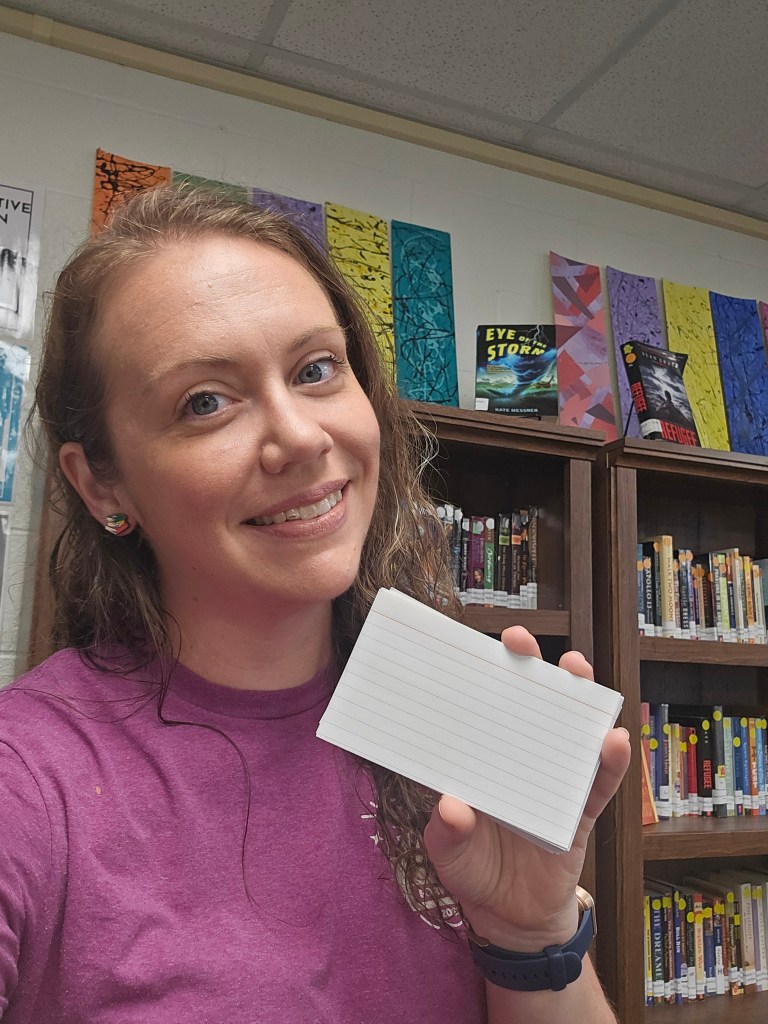
1. Favorites Index Card from me, Allison @mrsmcmanusela
Give each student an index card. Have them write their first and last name on it. If you have multiple classes, have them write their hour, too. Then, tell them to fill the card with all of their favorite things. You could provide a list for them on the board that they can use to get ideas from. Obvious things like favorite food, sport, school subject work really well but less obvious ones like favorite radio show and YouTuber really get kids sharing.
You can ask an AI bot to make you a list, if you’re comfortable with that. Finally, collect the index cards and when you have a minute at the end of class over the next several days, break them back out to ask your students… “whose favorite food is buffalo chicken, likes romance novels and their favorite sport to watch is baseball but favorite sport to play is soccer?” (It’s me, btw).
2. Silent Note-Writing from Mrs. Spangler in the Middle
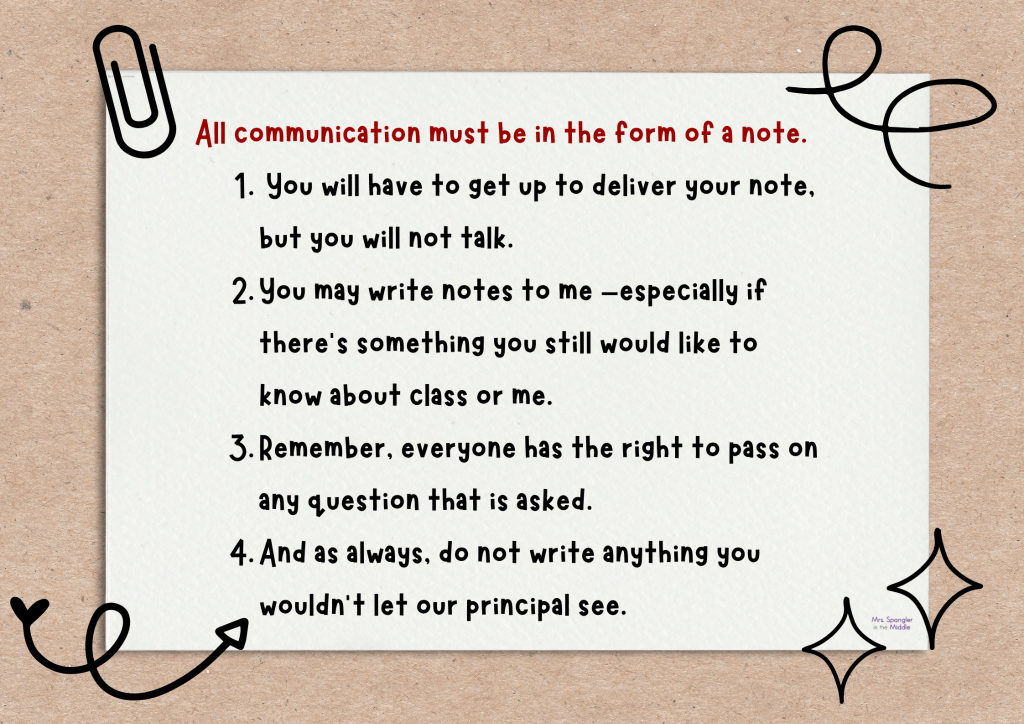
Have each student take out a piece of paper. Tell them: All communication must be in the form of a note. You will have to get up to deliver your note, but you will not talk. You may write notes to me –especially if there’s something you still would like to know about class or me. Remember, everyone has the right to pass on any question that is asked. And as always, do not write anything you wouldn’t let our principal see. Then allow students to write notes for as long as you have time!
3. Post-It Note Question of the Day from Linda @all.in.one.middle.school
Create a question of the day. It can be something really simple like “What’s your favorite way to spend a Saturday?” or something more complex like “What’s one thing you think everyone should try at least once?” You can also move into more community-building questions like “What’s one thing a classmate can do to make your day better?” Kids simply respond and stick their Post-it note under the question of the day. Works well if you have a section of a whiteboard to devote to this… it’s kind of a daily check-in for as long as you want it to be.
4. Back to School Scavenger Hunt from Lyndsey @LitwithLyns
Help students get to know your classroom expectations, procedures, the locations of supplies, and more by using an editable back to school scavenger hunt. Have students work independently, in pairs, groups, or whatever works best for you. You simply need to print the scavenger hunt, pass out 1 to each kid, and they will answer the 10 challenge questions. You can modify it to fit your needs. This will help students know where to turn in their work, what to do when they are absent, etc
5. Four 4s from Amy @amazingmaterials4you
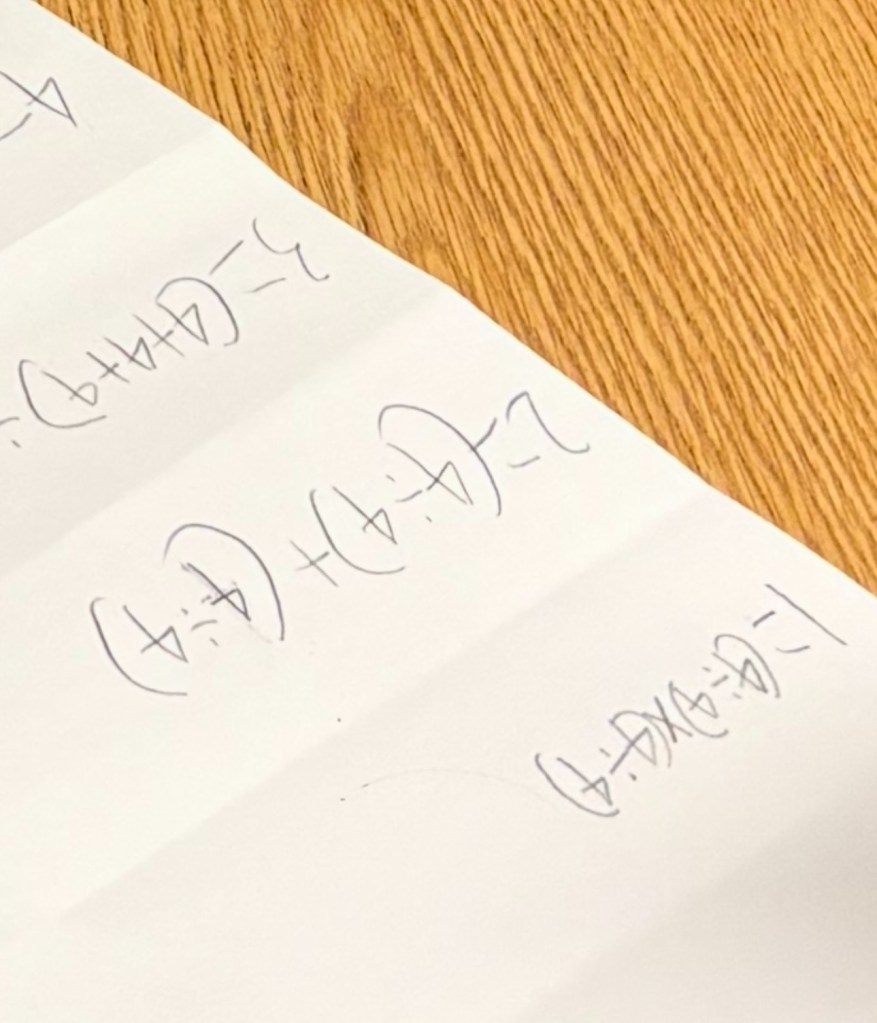
Something I do every year with my students is an activity called “Four 4s” where they have to use four 4s to make each number from 1 – 20. It comes the youcubed “week of inspirational math(s)” which can be found on the Stanford Graduate School of Education’s youcubed site.
Students work in small groups to create the numbers 1 – 20 with only four 4s – no more; no less. The productive struggle and engagement are through the roof. Students begin to explore exponents, factorials, and the order of operations in order to accomplish the task. They go back to work on the challenge for several days.
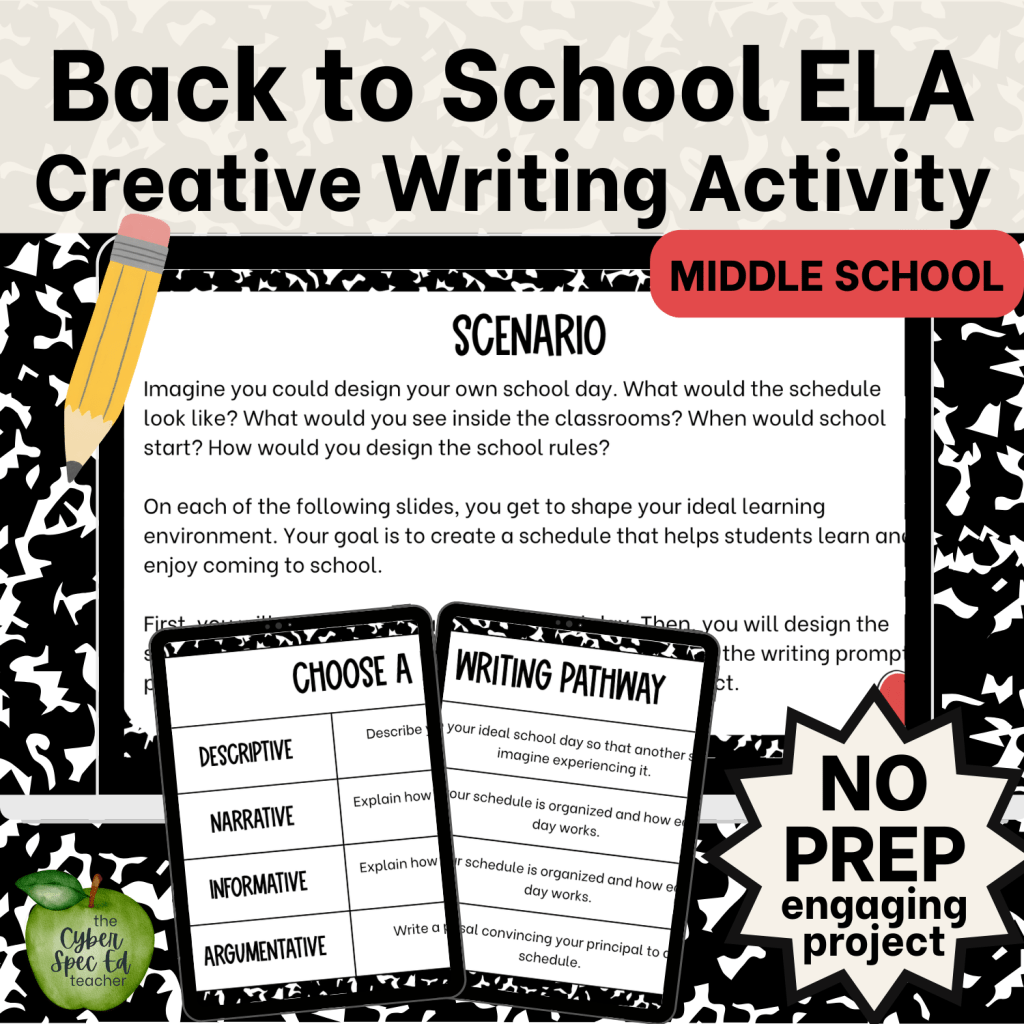
6. Design your ideal school day from Anna at Cyber Spec Ed Teacher
I am starting off the school year with a “Design your ideal school day” project. As a special education teacher with an ELA focus, this activity was designed to be modified for writers of all levels. Ideally for middle school, students can work independently or in small groups/partners to create an ideal school schedule that reflects their interests, learning preferences, and ideas for improving the school experience.
Teachers can choose from multiple writing pathways (descriptive, narrative, informative, or argumentative) or give students the freedom to choose their writing path. They walk through the writing process from brainstorming to pre-planning, to creating a fun school schedule design, and finally, to writing a response.
It works well as a first-week community builder, a beginning of the year writing sample, a creative writing project later in the year, an independent activity, etc. It’s versatile. It’s also TOTALLY NO PREP and fully customizable in Canva.
7. First Day Jitters Reading Comp./Writing from Jeanne at JH Ed Consult
Start the school year with an engaging reading activity that helps students ease into learning!
“First Day Jitters” is a free back-to-school reading comprehension activity designed for middle school students. This ready-to-use resource includes a high-interest passage and 4 Depth of Knowledge (DOK) questions that guide students from basic recall to deeper thinking and reflection.
Perfect for the first day or first week of school, this activity helps students practice comprehension, support their answers with evidence, and build confidence as readers.
Use it for independent practice, small groups, bell ringers, classroom discussions, or an easy first-week lesson that requires little prep.

8. Two Truths and a Lie from Dominque @theesleducator
Give each student a strip of paper. Tell them to write three statements on it: two that are true about them and one that is a lie. Break them out when you have a few minutes, read one out to everyone, and have the student it belongs to answer questions from the other students to find out which one is the lie. It helps students get to know each other in a fun way!
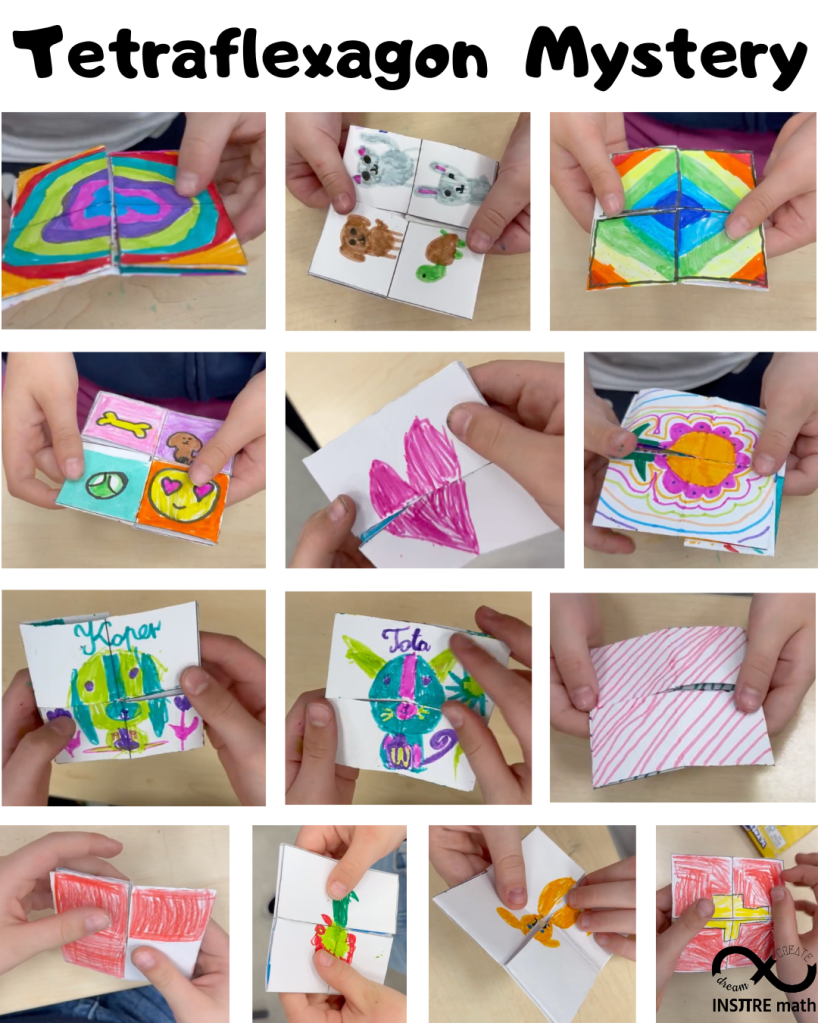
9. Tetraflexagon Mystery from Marta, Inspire Math Matematyka
Want to get to know your new students on day one and let them share their favorite summer adventures? Give each student a copy of this free tetraflexagon template. If you haven’t seen one, it is basically a flat paper square that magically folds infinitely to reveal hidden faces.
Before the folding madness begins, have your students fill the blank squares with their favorite things, best summer memories, or a few fun facts about themselves.
They will love fidgeting with it, and it is a super chill, hands-on way for you to walk around the room, chat, and actually connect with your new group. Plus, you get a little math-art fusion for the first week without any stress. Grab the free template and video tutorial to get started!
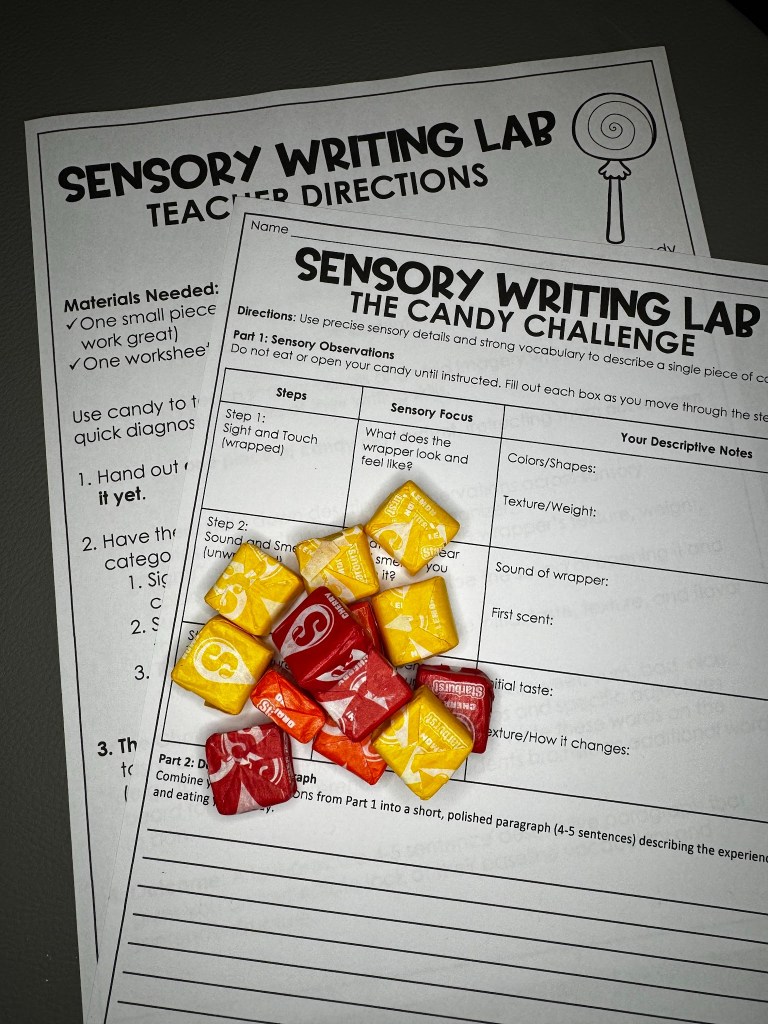
10. Sensory Writing Diagnostic from Cadie, Edit Or Regret It
Looking for a first-week activity that instantly engages students and gives you a clear snapshot of their writing skills? The Sensory Writing Lab turns a simple piece of candy into a powerful diagnostic tool without the first-week anxiety of a traditional essay.
By pairing a hands-on sensory experience with a fun “banned words” challenge (no good, sweet, or yummy allowed!), this low-stakes activity removes writer’s block and pushes middle schoolers to experiment with precise adjectives and strong verbs. As students observe, unwrap, and taste their candy, you get an immediate, authentic look at their baseline vocabulary, sentence structure, and ability to follow multi-step directions.
Do you have a favorite back to school community builder, but also low-key time filler? Share about it in the comments! We’re always looking for more ideas.
Obviously not all of these are going to work for you in your classroom but it is always nice to have some new ideas that can help change things up. I, personally, LOVE the idea of using candy as an instigator for writing and art as a getting-to-know-you tool. I might even try to figure out how to turn the number four into an English lesson.
If you need even more back to school ideas, check out this post about prioritizing and setting up good routines. And if you’re finished planning the first few weeks and want to get a jump start on your curriculum but aren’t sure where to start… my advice is to get know how the Science of Reading research applies to your secondary classroom. No matter what you teach — IF YOU READ IN YOUR CLASSROOM — you CAN use the Science of Reading research! I have a simple, two page guide for implementing it, with a video explanation for how to use it, or you can read more here.


Leave a comment