-
It seems too good to be true.
Or maybe it’s just too overwhelming. And I understand both of those sentiments. Just because something is on sale doesn’t mean it’s worth your time, your money, or your lesson plans. I also know that it is pretty much impossible to really preview what you’re getting when you are deciding which one to purchase. I’ve Continue reading
-
Grade-Level Grammar Lessons Based on Common Core ELA Standards

Grammar instruction is SOOOO important in middle and high school English Language Arts education! I cannot speak for anyone but myself BUT I do feel like grammar is the thing that many teachers leave for last or teach in complete isolation. I know that I did and we cannot do that! But how do we Continue reading
-
Ditch the Strategies: What Secondary ELA Teachers Should Be Teaching Instead
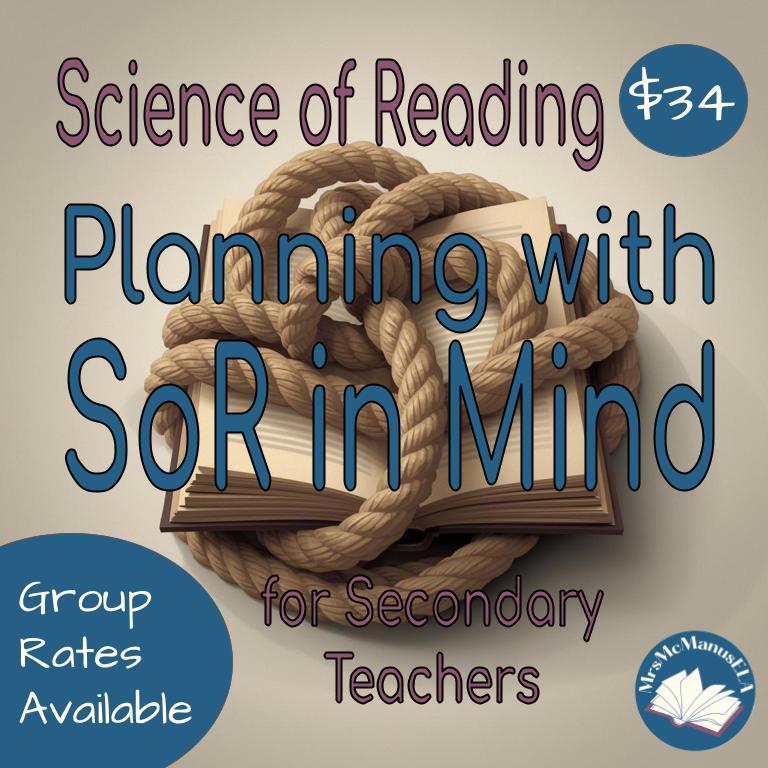
Let’s be honest, most of us were not trained to teach kids how to read. We know all of the reading strategies, though. And you’ve probably taught your students to use them: make predictions, visualize, ask questions, and summarize. I still hang anchor charts with sentence starters for inferences or text-to-self connections. And doing all Continue reading
-
Effective Word-Level Interventions for the Secondary Setting
Decoding skills are foundational for reading proficiency, but many secondary students still struggle in this area. These students don’t just struggle academically. They often exhibit behavior problems, as well, as a way to mask their inability to read. Their difficulty with decoding makes it impossible to engage with and comprehend grade-level texts across all subjects. Continue reading
-
Build Your Secondary ELA Classroom Around Scarborough’s Reading Rope: 5 Structural Shifts That Make It Happen

If you have been around here for any length of time, you know how I feel about Scarborough’s Reading Rope. It’s the best thing since sliced bread, friends. Seriously, I love it because it provides us with a framework for actually teaching comprehension. You might wonder how you can actually use it in a secondary Continue reading
-
May the Close Reading Force Be With You!
Are you looking for a fun, engaging way to help your secondary ELA students become stronger readers? Try “Reading like a Jedi.” This fun twist on close reading is designed to combine the excitement of the Star Wars universe with research-backed reading practices from Scarborough’s Reading Rope. Why a Star Wars Twist Works Pop culture Continue reading
-
Five Essential Steps to Comprehension
In a world full of information, understanding what you read is one of the most essential skills a person can have. Whether you’re enjoying a novel, perusing a news article, or tackling a technical manual, comprehension helps you grasp the meaning, connect to new ideas, and make informed decisions. So here are the five necessary Continue reading
-
Transforming Test Preparation in the Classroom
Test prep season is an inevitable part of the school year, often met with a mix of stress and determination by both teachers and students. Standardized tests are designed to assess student progress and school performance, but they also bring added pressure for teachers, working to ensure students are prepared. While it’s tempting to shift Continue reading
-
Unlocking Deeper Comprehension: Engaging Strategies for Teaching Inferences in English Language Arts

Strong reading comprehension requires students to think beyond the text, make connections, and draw conclusions. This is where inferential and critical thinking play a crucial role. Scarborough’s Reading Rope places these skills into the category of Verbal Reasoning. This strand supports the reader’s ability to understand implied meanings, recognize themes, and analyze an author’s intent. Continue reading
-
Understanding the Difference Between Global and Local Inferences

Reading comprehension is more than just decoding words on a page—it involves actively making connections and drawing conclusions based on the text. One of the components of Scarborough’s Reading Rope is Verbal Reasoning or Inferential Thinking. Inferences are one of the most common things that ELA teachers focus on in our secondary instruction, at least Continue reading